Books › A Theory of Cognitive Dissonance

A Theory of Cognitive Dissonance
423 pages
A foundational, paradigm-shifting exploration of the mental gymnastics we perform to keep our beliefs intact.
What it feels like
Reading this foundational text feels like being handed the blueprint to human irrationality. The pace is steady and methodical, guiding you through the architecture of the mind with an analytical, objective tone. It is not a breezy pop-science read, but rather a rigorous, illuminating journey that demands your intellectual engagement. As the arguments build, the mood shifts from purely academic curiosity to a deeply introspective, almost unsettling awareness of your own mental habits. You will find yourself pausing to reflect on the everyday self-justifications and psychological conflicts that shape human behavior. It is a deeply rewarding experience for anyone who delights in behavioral science, offering a timeless, clear-eyed look at the lengths to which we go to protect our own convictions.
- Mood
- intellectual
- contemplative
- illuminating
- introspective
- Tone
- analytical
- objective
- methodical
- authoritative
- Pace
- steady
- Themes
- human irrationality · self-justification · psychological conflict · belief preservation · mental gymnastics
- The writing
- Academic and precise, building its arguments with clear, methodical logic and empirical examples.
- The arc
- Begins with abstract intellectual curiosity and deepens into an uncomfortable but fascinating recognition of one's own everyday self-deceptions.
- Who it's for
- Readers fascinated by behavioral science and the hidden, often irrational mechanisms that govern human decision-making.
About the book
Rev. and enl. German translation published under title: Theorie der kognitiven Dissonanz. 1978.
Bibliography: p. 281-285.
Description from Open Library.
Books like A Theory of Cognitive Dissonance
See why they match Cognitive psychologyRobert L. SolsoA rigorous, methodical journey through the architecture and mechanics of the human mind.
 Cognitive therapy and the emotional disordersAaron T. BeckA foundational, analytical exploration of how our thoughts shape our emotional reality and psychological distress.
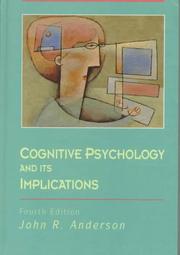 Cognitive psychology and its implicationsJohn R. AndersonA rigorous, structured journey into the mechanics of the human mind, mapping exactly how we think, learn, and remember.
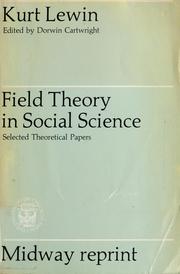 Field theory in social scienceLewin, KurtA rigorous, mid-century intellectual puzzle that maps the invisible forces shaping how we act in groups.
 MotivationRobert C. BeckA rigorous, academic deep-dive into the psychological and physiological engines of human behavior.
 Introduction to psychologyDennis CoonA structured, illuminating journey into the mechanics of the mind and the roots of human behavior.