Books › An Anthropologist on Mars
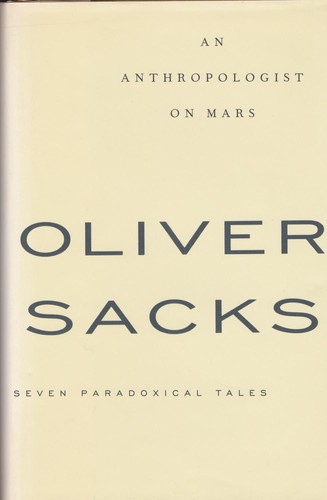
An Anthropologist on Mars
First published 1995 · 480 pages
A deeply empathetic and wondrous exploration of the extraordinary landscapes of the human mind.
What it feels like
Reading this book feels like taking a quiet, deeply observant walk alongside a brilliant and boundlessly empathetic physician. It is a steady, contemplative journey that invites you to step outside your own perception of reality and inhabit the profoundly different worlds of others. The prose is elegant and lucid, translating complex neurological conditions into warm, humanistic portraits that never reduce individuals to mere case studies. Instead, the atmosphere is steeped in wonder and profound respect for the brain's astonishing adaptability. It is a book that delights curious, philosophical readers who are fascinated by the intersection of science and the humanities, leaving you with a lingering sense of awe at the resilience and infinite variety of the human experience.
- Mood
- contemplative
- intimate
- wonder-filled
- awe-inspiring
- Tone
- empathetic
- curious
- philosophical
- respectful
- lucid
- Pace
- steady
- Themes
- neurodiversity and identity · adaptability of the human brain · subjective reality · resilience in illness · the intersection of science and humanity
- The writing
- Elegant and deeply observant, seamlessly weaving complex neurological concepts into warm, poetic, and deeply human storytelling.
- The arc
- Begins with clinical curiosity and deepens into profound empathy, culminating in a sense of awe at the mind's infinite adaptability.
- Who it's for
- Curious minds who are fascinated by psychology, neuroscience, and the profound mysteries of human perception and identity.
Content notes
- medical trauma
- chronic illness
- mental health struggles
- disability
About the book
Neurological patients, Oliver Sacks once wrote, are travellers to unimaginable lands.
An Anthropologist on Mars offers portraits of seven such travellers - including a surgeon consumed by the compulsive tics of Tourette's syndrome unless he is operating; an artist who loses all sense of color in a car accident, but finds a new sensibility and creative power in black and white; and an autistic professor who cannot decipher the simplest social exchange between humans, but has built a career out of her intuitive understanding of animal behavior.
These are paradoxical tales, for neurological disease can conduct one to other modes of being that - however abnormal they may be to our way of thinking - may develop virtues and beauties of their own. The exploration of these individual lives is not one that can be made in a consulting room or office, and Sacks has taken off his white coat and deserted the hospital, by and large, to join his subjects in their own environments.
He feels, he says, in part like a neuroanthropologist, but most of all like a physician, called here and there to make house calls, house calls at the far border of experience. Along the way, he shows us a new perspective on the way our brains construct our individual worlds. In his lucid and compelling reconstructions of the mental acts we take for granted - the act of seeing, the transport of memory, the notion of color - Oliver Sacks provokes anew a sense of wonder at who we are.
Includes bibliographical references (p. [297]-315) and index.
Description from Open Library.
Books like An Anthropologist on Mars
See why they match The Man Who Mistook His Wife for a HatOliver SacksA deeply empathetic and beautifully written exploration of the bizarre ways the human brain can misfire, revealing the fragile essence of who we are.
 The Island of the Colorblind and Cycad IslandOliver SacksA lush, empathetic journey into remote Pacific islands that blends medical mystery with a profound meditation on human perception and deep time.
 The Brain That Changes ItselfNorman DoidgeAn awe-inspiring exploration of human resilience that will fundamentally change how you view your own mind's potential.
 Thinking in PicturesTemple GrandinAn illuminating and deeply personal journey into a mind that processes the world through concrete imagery rather than abstract words.
 An unquiet mindKay Redfield JamisonA fiercely articulate descent into the terrifying highs and crushing lows of a brilliant, fractured mind.
 Phantoms in the brain : probing the mysteries of the human mindV. S. RamachandranA mind-bending and deeply empathetic exploration of the bizarre neurological glitches that reveal how our brains construct reality.