Books › An introduction to language

An introduction to language
First published 1974 · 715 pages
A clear, comprehensive, and deeply curious exploration of the invisible scaffolding that holds human communication together.
What it feels like
Reading this book feels like being handed the blueprint to human thought. It is a steady, intellectually stimulating journey through the mechanics of how we communicate, breaking down the invisible rules we use every day without realizing it. The tone is authoritative yet deeply encouraging, designed to guide the curious reader through complex concepts like syntax, phonology, and neurolinguistics without ever feeling overwhelmingly dense. The prose is clear, structured, and peppered with fascinating examples from diverse languages, including sign language. It delights language nerds, students, and anyone who has ever paused mid-sentence to wonder why we say things the way we do, leaving the reader with a profound appreciation for the intricate, universal architecture of human language.
- Mood
- intellectually stimulating
- structured
- curious
- Tone
- informative
- accessible
- academic
- encouraging
- authoritative
- Pace
- steady
- Themes
- the mechanics of human communication · the universality of language · cognitive structures · cultural expression
- The writing
- Clear, structured, and student-friendly, breaking down complex linguistic theories into digestible, engaging explanations.
- The arc
- Moves from a foundational curiosity about everyday speech to a profound appreciation for the complex, hidden architecture of human thought.
- Who it's for
- Students of linguistics, language enthusiasts, and anyone fascinated by the hidden rules governing how we speak and think.
About the book
"An Introduction to Language is the ideal text for students at all levels and in many different areas of instruction, including linguistics, English, education, foreign languages, psychology, anthropology, sociology, and teaching English as a Second Language (TESL). Continuing the authors' tradition of making each edition the most current, complete, and informative on the market, this Eighth Edition reflects the best and most recent research in all areas of linguistics while retaining its signature student-friendly style." "Key Features to this Eighth Edition include: Extensive updates to every chapter, including: a new section on the Sapir-Whorf hypothesis, new information on neurolinguistics, extensive new material on bilingualism and teaching a second language, a thoroughly updated treatment of syntax, a completely rewritten chapter on semantics and pragmatics that reflects modern thinking, a revised chapter on sociolinguistics that emphasizes recent findings, and a greatly expanded section on syntactic change. Up-to-date descriptions of the major components of language (phonetics, phonology, morphology, syntax, semantics, and pragmatics)-all discussed at a current, yet introductory, level. Information about American Sign Language and other sign languages woven throughout the text, helping readers appreciate them as bona fide languages with many of the same characteristics as spoken languages. Usage of IPA symbols throughout the text. A summary of important material at the end of each chapter, as well as a comprehensive list of references, suggestions for further reading, and exercises. The most extensive and concisely written glossary of terms of any introductory text, as well as a thorough index that makes it easy to navigate the book. Book jacket."--BOOK JACKET
Description from Open Library.
Books like An introduction to language
See why they match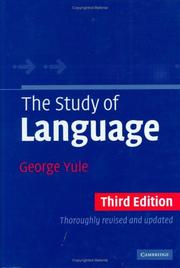 The study of languageGeorge YuleAn accessible, structured exploration of the sounds, structures, and cultural meanings that shape human communication.
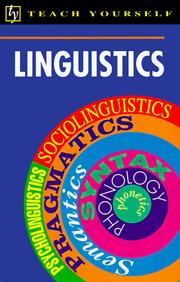 LinguisticsAitchison, JeanA structured, methodical exploration of the mechanics of human language designed for study and teaching.
 How Language WorksDavid CrystalA delightful, eye-opening tour through the invisible architecture of the words we use every day.
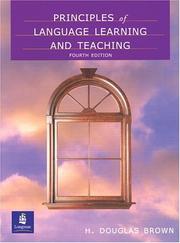 Principles of language learning and teachingH. Douglas BrownA comprehensive, structured journey through the cognitive and practical foundations of how we learn and teach languages.
 Language FilesHope DawsonA structured, illuminating journey into the hidden mechanics and fascinating diversity of human language.
 Through the language glassGuy DeutscherA witty, mind-bending tour through the hidden ways our mother tongues sculpt our perception of reality.