Books › Aus meinem Leben

Aus meinem Leben
947 pages
An elegant, sweeping reflection on the alchemy of memory, art, and the making of a literary genius.
What it feels like
Reading this autobiography feels like taking a long, unhurried walk through 18th-century Europe with one of history's greatest minds as your guide. The pace is decidedly leisurely, inviting you to linger over philosophical tangents, youthful romances, and the vibrant cultural shifts of the era. It is less a strict historical record than a poetic meditation on how a mind is formed, blending earnest nostalgia with sharp, erudite analysis. The prose is expansive and elegant, wrapping the reader in a contemplative, almost grand atmosphere where every childhood anecdote holds a deeper universal truth. It will deeply delight lovers of literary history, philosophical memoirs, and anyone fascinated by the delicate interplay between a writer's lived experience and their art.
- Mood
- contemplative
- intellectual
- grand
- sun-lit
- Tone
- reflective
- erudite
- nostalgic
- philosophical
- earnest
- Pace
- leisurely
- Themes
- formation of an artist · intellectual awakening · memory versus truth · coming of age · the spirit of an era
- The writing
- Expansive, elegant, and deeply analytical, blending intimate personal memories with sweeping historical and philosophical reflections.
- The arc
- A journey from the wide-eyed curiosity of a privileged childhood to the passionate, sometimes turbulent self-discovery of a young genius.
- Who it's for
- Lovers of literary history and philosophical memoirs who enjoy immersing themselves in the intellectual currents of 18th-century Europe.
Content notes
- romantic heartbreak
- grief
About the book
Cover-title:... Wiley and Putnam's library of choice reading. Goethe's autobiography. Poetry and truth from my life, from the German of Goethe, by Parke-Godwin. In two parts. Parts I-[II; III and IV] At head of cover-titles: no. LXXV, LXXVI, XCVIII and XCIX. "Books which are books."--Charles Lamb. Each part has separate t.-p. and pagination. The mottos of the four parts in the original edition are quoted on the respective title-pages: 1st part,; 2d part, Was man in der jugend wu̇nscht, hat man im alter der [!] fu̇lle; 3d part, Es ist dafür gesorgt, dass die baüme nicht in den himmel wachsen; 4th part, Nemo contra Deum nisi Deus ipse. The first part is translated by the editor; the second, by John Henry Hopkins, jr.; third, by Charles A. Dana, and fourth, by John S. Dwight. cf. Advertisement, pt. II, and editor's note, pt. IV, at end. The translations of "Annals; or, Day and year book", "Italian journey", etc., and Goethe's dramas, projected, according to "Preface by the editor", to form part of the series, were never published. The series was brought to an end in 1848, at the dissolution of the publishers' partnership. Preface by the editor contains this statement: "Several years since there was what purported to be a translation published in London; but this was a disgraceful imposture. Mrs. Austin speaks of it as the most flagrant piece of literary dishonesty on record, not without justice; and Mr. Carlyle refers to it much in the same spirit. It was a poor copy of a wretched French version, in which frequently twenty pages of the original are omitted at a time, and hardly a sentence is rendered with fidelity." This refers to an anonymous translation published in 2 vols., London, 1824, and reprinted in 1 vol., New York, 1824 and 1844. cf. Characteristics of Goethe. From the German of Falk, von Müller, etc., with notes... by S. Austin, vol. II (1833) p. 129, and Carlyle's Crit. and miscell. essays, New York, 1872, vol. I, p. 178.
Description from Open Library.
Books like Aus meinem Leben
See why they match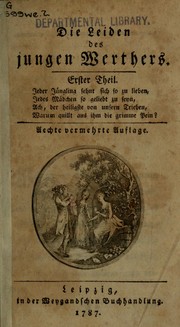 Die Leiden des jungen WerthersJohann GoetheA feverish, intimate plunge into the beautiful and terrifying depths of an all-consuming, doomed obsession.
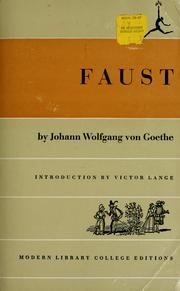 FaustJohann Wolfgang von GoetheA tempestuous, poetic descent into the intoxicating and tragic depths of human ambition and demonic temptation.
 CosmosAlexander von HumboldtA sweeping, poetic journey through the interconnected wonders of the natural world, blending rigorous science with Romantic awe.
 Duineser ElegienRainer Maria RilkeA deeply tactile and reverent encounter with German elegiac poetry, meant to be savored slowly across dual-language pages.
 The works of HoraceHoraceA timeless invitation to pour a glass of wine, retreat to the countryside, and ponder the fleeting, beautiful nature of a well-lived life.
 Elizabeth and Her German GardenElizabeth von ArnimA witty, sun-dappled retreat into a private sanctuary where blooming flowers are vastly preferred over polite society.