Books › Basic economics

Basic economics
First published 2000 · 704 pages
A masterclass in stripping away political rhetoric to reveal the hidden, often counterintuitive gears that drive human societies.
What it feels like
Reading this book feels like putting on a pair of glasses that suddenly brings a blurry world into sharp focus. It moves at a steady, methodical pace, stripping away political rhetoric and academic jargon to reveal the hidden gears of human society. The mood is deeply clarifying and pragmatic, grounded in a no-nonsense tone that favors historical reality over theoretical equations. You aren't just learning definitions; you are absorbing a new way of thinking about trade-offs, incentives, and unintended consequences. The prose is exceptionally lucid, using vivid, real-world examples from rent control in New York to agriculture in the Soviet Union to make complex concepts feel like common sense. It will delight curious laypeople who crave a clear-eyed understanding of how the world actually works.
- Mood
- intellectual
- clarifying
- grounded
- Tone
- authoritative
- pragmatic
- clear-eyed
- no-nonsense
- didactic
- Pace
- steady
- Themes
- unintended consequences · the power of incentives · hidden mechanics of society · trade-offs over solutions · resource allocation
- The writing
- Exceptionally lucid and jargon-free, relying on vivid historical examples and plain English rather than graphs or equations.
- The arc
- Moves from a sense of bewilderment at societal dysfunction to a satisfying, empowering clarity about the mechanics driving human behavior.
- Who it's for
- Curious laypeople and civic-minded readers who want to understand the economic forces shaping their world without needing a math degree.
Content notes
- discussions of poverty
- historical tragedies
- famine
About the book
"Why are homeless people sleeping on the sidewalks of New York in the winter, when the abandoned apartment buildings in the city have four times as many dwelling units as there are homeless people in the city? Why are people hungry in Moscow when there are vast amounts of some of the richest farmland on the continent of Europe within easy driving distance?
Why did unemployment reach 25 percent and American corporations as a whole operate in the red for two years in a row during the Great Depression of the 1930s?".
"All these very different - but equally puzzling and needless - tragedies grew out of a failure to understand and apply basic economic principles. Explaining these principles for the general public in plain English, with neither graphs nor equations nor jargon, is the goal and the achievement of Basic Economics by Thomas Sowell.
Professor Sowell has taught economics at leading colleges and universities across the country and now uses his years of experience to bring economics to light in a way that is both easy to absorb and hard to forget.".
"His lively examples are drawn from around the world and from centuries of history, because the basic principles of economics are not limited to modern capitalist societies and apply even to situations where no money changes hands, such as caring for wounded soldiers on a battlefield. The focus of Basic Economics is not on how individuals make money but on how whole societies create prosperity or poverty for their peoples by the way they organize their economies.
Prosperous countries with few natural resources, such as Japan and Switzerland, are as common as poor countries with rich resources, such as Russia or Mexico."--BOOK JACKET.
Description from Open Library.
Books like Basic economics
See why they match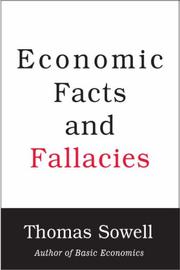 Economic Facts and FallaciesThomas SowellA sharp, no-nonsense dismantling of popular economic myths that trades emotional rhetoric for cold, hard data.
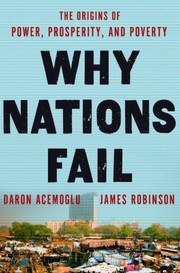 Why Nations FailDaron Acemoglu and James A. RobinsonA sweeping, intellectually rigorous journey through history that decodes the hidden machinery of global inequality.
 Good Economics for Hard TimesEsther DufloA compassionate, myth-busting journey through modern policy that replaces partisan panic with evidence-based hope.
 The undercover economist strikes backTim HarfordA witty, jargon-free tour through the hidden gears of the global economy that makes macroeconomics feel like a fascinating dinner party conversation.
 How an economy grows and why it crashesPeter D. SchiffA witty, take-no-prisoners allegory that transforms dense macroeconomic theory into an accessible, eye-opening narrative.
 Free to chooseMilton FriedmanA passionate, accessible defense of free markets that feels like a fireside chat with a very persuasive economics professor.