Books › Blindsight

Blindsight
455 pages
A chilling, fiercely intelligent plunge into the dark void of space that will make you question the evolutionary value of your own consciousness.
What it feels like
Reading this book feels like being trapped in a freezing, claustrophobic airlock with a terrifyingly brilliant philosopher. It is a masterclass in existential dread, wrapping profound questions about the nature of consciousness and free will inside a tense, deeply unsettling first-contact narrative. The prose is dense, clinical, and unapologetically technical, demanding that you slow down and chew on its radical scientific concepts. There is no warmth here, only the cold, hard vacuum of space and the chilling realization that human sentience might be an evolutionary dead end. It will absolutely delight readers who love their hard science fiction bleak, brain-melting, and utterly devoid of comforting anthropocentrism, leaving a lingering sense of cosmic insignificance long after the final page.
- Mood
- dread-soaked
- claustrophobic
- cerebral
- chilling
- alienating
- Tone
- clinical
- bleak
- philosophical
- cynical
- detached
- Pace
- steady
- Themes
- the illusion of consciousness · post-human evolution · existential insignificance · the limits of empathy · first contact as trauma
- The writing
- Dense, highly technical, and unapologetically intellectual, weaving hard science into cold, razor-sharp observations.
- The arc
- Moves from a tense, clinical curiosity into a spiraling, claustrophobic realization of humanity's profound cosmic irrelevance.
- Who it's for
- Hard sci-fi fans who crave rigorous scientific speculation, philosophical pessimism, and mind-bending explorations of what it means to be sentient.
Content notes
- existential dread
- body horror
- gore
- psychological trauma
- medical trauma
About the book
Two months since the stars fell...
Two months since sixty-five thousand alien objects clenched around the Earth like a luminous fist, screaming to the heavens as the atmosphere burned them to ash. Two months since that moment of brief, bright surveillance by agents unknown.
Two months of silence while a world holds its breath.
Now some half-derelict space probe, sparking fitfully past Neptune's orbit, hears a whisper from the edge of the solar system: a faint signal sweeping the cosmos like a lighthouse beam. Whatever's out there isn't talking to us. It's talking to some distant star, perhaps. Or perhaps to something closer, something en route.
So who do you send to force introductions on an intelligence with motives unknown, maybe unknowable? Who do you send to meet the alien when the alien doesn't want to meet?
You send a linguist with multiple personalities, her brain surgically partitioned into separate, sentient processing cores. You send a biologist so radically interfaced with machinery that he sees X-rays and tastes ultrasound, so compromised by grafts and splices that he no longer feels his own flesh. You send a pacifist warrior in the faint hope she won't be needed, and a fainter hope that she'll do any good if she is needed. You send a monster to command them all, an extinct hominid predator once called "vampire," recalled from the grave with the voodoo of recombinant genetics and the blood of sociopaths. And you send a synthesist—an informational topologist with half his mind gone—as an interface between here and there, a conduit through which the Dead Center might hope to understand the Bleeding Edge.
You send them all to the edge of interstellar space, praying you can trust such freaks and retrofits with the fate of a world. You fear they may be more alien than the thing they've been sent to find.
But you'd give anything for that to be true, if you only knew what was waiting for them....
Description from Open Library.
Books like Blindsight
See why they match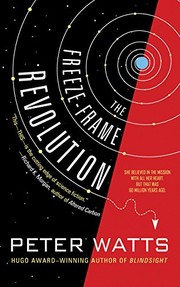 The Freeze-Frame RevolutionPeter WattsA claustrophobic, deep-time heist where the greatest enemy is an ever-watchful, terrifyingly benevolent AI.
 EchopraxiaPeter WattsA claustrophobic, intellectually relentless plunge into a post-human future where baseline humanity is terrifyingly obsolete.
 AccelerandoCharles StrossA relentless, jargon-fueled rollercoaster ride through the technological singularity that will leave your brain feeling overclocked.
 In the Ocean of NightGregory BenfordA chilling, awe-inspiring plunge into the cold realities of a universe where humanity is neither alone nor welcome.
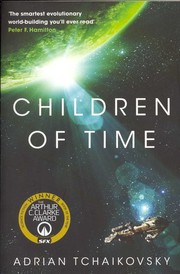 Children of TimeAdrian TchaikovskyA sweeping, deep-time evolutionary epic that will make you root for the most unlikely of sentient species.
 The Dreaming VoidPeter F. HamiltonA sprawling, galaxy-spanning epic that balances mind-bending post-human technology with the intimate, fantasy-tinged allure of a mysterious utopia.