Books › But What If We're Wrong?

But What If We're Wrong?
Thinking About the Present As If It Were the Past
272 pages
A playful, mind-bending thought experiment that dismantles everything you think you know about the present by viewing it from the distant future.
What it feels like
Reading this book feels like staying up late with your smartest, most culturally obsessed friend, dismantling reality piece by piece. It moves at a brisk, conversational clip, effortlessly pivoting from the physics of gravity to the legacy of rock music, wrapping deep epistemological questions in highly accessible pop-culture packaging. The mood is playful yet dizzying, inducing a mild, highly enjoyable existential vertigo as you realize how little of our current certainty will survive the test of time. The prose is wry, inquisitive, and relentlessly entertaining, making complex philosophical thought experiments feel as casual as a barstool debate. It is the perfect read for cultural omnivores and armchair philosophers who delight in having their most fundamental assumptions turned completely upside down.
- Mood
- mind-expanding
- playful
- contemplative
- dizzying
- Tone
- wry
- inquisitive
- conversational
- skeptical
- humorous
- Pace
- brisk
- Themes
- epistemological uncertainty · cultural legacy · the illusion of certainty · historical perspective · the passage of time
- The writing
- Conversational, witty, and highly accessible, blending pop culture references with deep philosophical inquiry.
- The arc
- Moves from comfortable certainty to a playful, dizzying realization of our own historical ignorance, ending in a state of curious acceptance.
- Who it's for
- Pop-philosophy enthusiasts and cultural omnivores who enjoy having their assumptions challenged over a metaphorical beer.
Content notes
- mild existential dread
About the book
"We live in a culture of casual certitude. This has always been the case, no matter how often that certainty has failed. Though no generation believes there's nothing left to learn, every generation unconsciously assumes that what has already been defined and accepted is (probably) pretty close to how reality will be viewed in perpetuity. And then, of course, time passes. Ideas shift. Opinions invert. What once seemed reasonable eventually becomes absurd, replaced by modern perspectives that feel even more irrefutable and secure--until, of course, they don't. But What If We're Wrong? visualizes the contemporary world as it will appear to those who'll perceive it as the distant past.^
Chuck Klosterman asks questions that are profound in their simplicity: How certain are we about our understanding of gravity? How certain are we about our understanding of time? What will be the defining memory of rock music, five hundred years from today? How seriously should we view the content of our dreams? How seriously should we view the content of television? Are all sports destined for extinction? Is it possible that the greatest artist of our era is currently unknown (or--weirder still--widely known, but entirely disrespected)? Is it possible that we "overrate" democracy? And perhaps most disturbing, is it possible that we've reached the end of knowledge? Kinetically slingshotting through a broad spectrum of objective and subjective problems, But What If We're Wrong? is built on interviews with a variety of creative thinkers--George Saunders, David Byrne, Jonathan Lethem, Kathryn Schulz, Neil deGrasse Tyson, Brian Greene, Junot Díaz, Amanda Petrusich, Ryan Adams,^
Nick Bostrom, Dan Carlin, and Richard Linklater, among others--interwoven with the type of high-wire humor and nontraditional analysis only Klosterman would dare to attempt. It's a seemingly impossible achievement: a book about the things we cannot know, explained as if we did. It's about how we live now, once "now" has become "then.""--
Description from Open Library.
Books like But What If We're Wrong?
See why they match Sex, Drugs, and Cocoa PuffsChuck KlostermanA hyper-caffeinated, wildly entertaining deep dive into the profound philosophical truths hidden inside our trashiest pop culture.
 The half-life of factsSamuel ArbesmanA reassuring and fascinating exploration of why what we know is always changing, and how to find comfort in the predictable rhythms of discovery.
 The Psychopath TestJon RonsonA darkly funny, slightly paranoid plunge into the blurry line between eccentricity and clinical madness.
 The NinetiesChuck KlostermanA sharp, hyper-articulate time machine that dissects the last era before the internet swallowed reality.
 I was told there'd be cakeSloane CrosleyA wry and hilarious celebration of well-intentioned haplessness in the modern city.
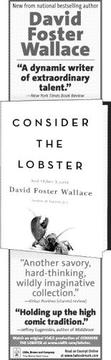 Consider the lobster, and other essaysDavid Foster WallaceA dizzying, hyper-articulate plunge into the absurdities and moral anxieties of modern American life.