Books › Crome yellow
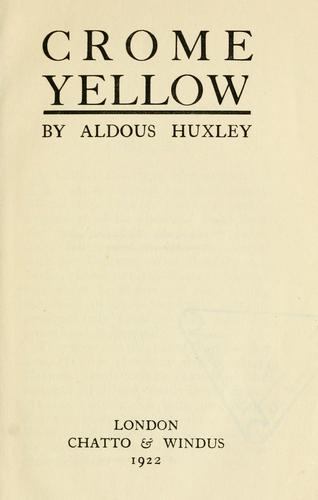
Crome yellow
481 pages
A sparkling, cynical country-house comedy where intellectuals talk endlessly and accomplish absolutely nothing.
What it feels like
Reading this novel feels like attending a sun-drenched, endlessly long summer party where the champagne is dry and the guests are insufferably, delightfully pretentious. The pace is decidedly leisurely, mirroring the languid days of its country estate setting, where action is entirely replaced by philosophical banter and romantic missteps. It is a masterclass in wry, detached observation, wrapping a subtle post-war melancholy in layers of sparkling, cynical wit. The prose is elegant and epigrammatic, perfectly suited for skewering the artistic and intellectual elite of the 1920s. It will thoroughly delight readers who love classic British satire, offering a breezy but sharp-edged immersion into a world where everyone has a theory about life, but no one actually knows how to live it.
- Mood
- languid
- breezy
- intellectually claustrophobic
- melancholic
- Tone
- wry
- satirical
- cynical
- witty
- detached
- Pace
- leisurely
- Themes
- intellectual pretension · the paralysis of youth · unrequited love · absurdity of the upper class · failure to communicate
- The writing
- Elegant, epigrammatic, and sharply observant, driven by sparkling dialogue and cynical philosophical musings.
- The arc
- Begins with romantic and artistic yearning, meandering through philosophical disillusionment before settling into a state of comic, paralyzed resignation.
- Who it's for
- Fans of classic British satire who delight in watching pretentious intellectuals talk themselves into circles during a long, lazy summer.
Content notes
- melancholy and mild suicidal ideation
- period-typical attitudes
About the book
“Crome Yellow” by Aldous Huxley; 1922
A young English poet, Denis Stone, is spending some time at Crome, an English estate and mansion of the Wimbush family. He is in love with Anne Wimbush, the niece of Henry Wimbush. The other guests include a few other writers, an artist, and it is in essence a small gathering of people who are also close friends. Denis has just started to write a novel. But he is going through a period of questioning himself as a writer. He is also unhappy that Anne does not love him. One particular evening he is feeling particularly miserable: “..........................Why had he climbed up to this high, desolate place? Was it to look at the moon? Was it to commit suicide? As yet he hardly knew. Death—the tears came into his eyes when he thought of it. His misery assumed a certain solemnity; he was lifted up on the wings of a kind of exaltation. It was a mood in which he might have done almost anything, however foolish..." Denis's train of thoughts is interrupted by Mary, another guest. He confides in her and she suggests that perhaps he should return to London, on the excuse of urgent business. But the next day, as prepares to leave Crome, has anything been resolved? The story ends on this note:
“.................Obediently Denis left the room. Never again, he said to himself, never again would he do anything decisive. Camlet, West Bowlby, Knipswich for Timpany, Spavin Delawarr; and then all the other stations; and then, finally, London. The thought of the journey appalled him. And what on earth was he going to do in London when he got there? He climbed wearily up the stairs. It was time for him to lay himself in his coffin............................”
Description from Open Library.
Books like Crome yellow
See why they match Those barren leaves, a novelAldous HuxleyA deliciously biting satire that strips the cultural elite of their pretensions under the Italian sun.
 Antic HayAldous HuxleyA dizzying, sharply cynical romp through the intellectual pretensions and hedonistic chaos of the Roaring Twenties.
 A Handful of DustEvelyn WaughA glittering, razor-sharp comedy of manners that slowly dissolves into a surreal and devastating nightmare.
 Voyage OutVirginia WoolfA slow, lushly observed journey of a young woman's awakening that drifts beautifully into existential tragedy.
 A Room with a ViewEdward Morgan ForsterA sun-drenched, gently satirical awakening of the heart amidst the stifling rules of Edwardian society.
 The white peacockDavid Herbert LawrenceA vivid, visionary exploration of modern estrangement and unfulfilled desire set against a vanishing English countryside.