Books › Democracy and Education
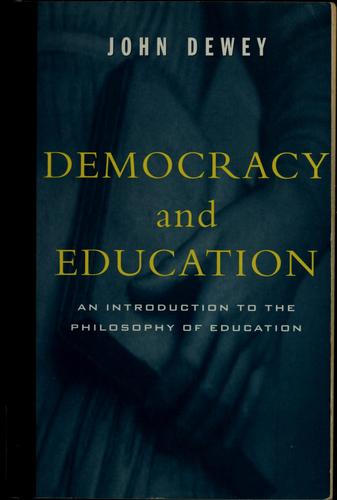
Democracy and Education
an introduction to the philosophy of education
644 pages
A rigorous, idealistic blueprint for how active, experiential learning can build a more just and vibrant society.
What it feels like
Reading this foundational text is a dense but deeply rewarding intellectual journey, akin to sitting in a sunlit lecture hall with a visionary thinker. The book challenges you to rethink the very nature of learning, dismantling the idea of rote memorization in favor of the messy, vibrant world of active experience. While the prose is undeniably academic and requires a patient, steady pace, the methodical rhythm of the argument builds into a profoundly hopeful vision of human potential. It is an atmosphere of rigorous idealism. This book will delight educators, philosophers, and anyone passionate about the intersection of civic life and personal growth, offering a timeless reminder that the classroom is the ultimate training ground for a thriving democracy.
- Mood
- contemplative
- serious
- hopeful
- intellectually rigorous
- Tone
- earnest
- intellectual
- pragmatic
- idealistic
- Pace
- steady
- Themes
- experiential learning · civic responsibility · social progress · the purpose of schooling · community building
- The writing
- Dense, academic, and methodical, yet punctuated by moments of profound, humanist clarity.
- The arc
- Moves from a critical examination of rigid traditions to an inspiring, expansive vision of human potential and democratic life.
- Who it's for
- Educators, philosophers, and civic-minded thinkers who want to understand the foundational roots of progressive education.
About the book
Publisher description: John Dewey (1859-1952) believed that learning was active and schooling unnecessarily long and restrictive. His idea was that children came to school to do things and live in a community which gave them real, guided experiences which fostered their capacity to contribute to society. For example, Dewey believed that students should be involved in real-life tasks and challenges: maths could be learnt via learning proportions in cooking or figuring out how long it would take to get from one place to another by mule history could be learnt by experiencing how people lived, geography, what the climate was like, and how plants and animals grew, were important subjects Dewey had a gift for suggesting activities that captured the center of what his classes were studying. Dewey's education philosophy helped forward the "progressive education" movement, and spawned the development of "experiential education" programs and experiments.
Description from Open Library.
Books like Democracy and Education
See why they match Experience and educationJohn DeweyA concise, intellectually rigorous meditation on how genuine learning is rooted in lived experience.
 Dumbing Us DownJohn Taylor GattoA fiery, paradigm-shifting critique that will make you question everything you thought you knew about what it means to be educated.
 Experiential LearningDavid A. KolbA rigorous, foundational exploration of how human beings transform raw experience into lasting knowledge.
 Ideas and opinionsAlbert EinsteinAn intimate, intellectual fireside chat with a brilliant mind grappling with the moral weight of the twentieth century.
 Pedagogia do OprimidoPaulo FreireA dense but deeply passionate philosophical manifesto that reimagines education as the ultimate act of collective liberation.
 A History of Western PhilosophyBertrand RussellA sweeping, witty, and highly opinionated journey through the minds that shaped Western civilization.