Books › Ego, hunger, and aggression

Ego, hunger, and aggression
332 pages
A provocative, foundational text that challenges orthodox psychology by demanding we look at the human mind and body as an inseparable, hungry whole.
What it feels like
Reading this foundational psychological text feels like sitting in on a brilliant, combative lecture that is actively dismantling the status quo. The pace is steady and demanding, requiring the reader to slow down and chew on dense theoretical concepts, fittingly, given the book's own focus on mental assimilation and the hunger instinct. The mood is intensely intellectual and contemplative, steeped in the mid-century urgency to redefine human consciousness away from orthodox Freudian models. Perls's prose is assertive, academic, and unapologetically rebellious, challenging you to rethink the boundaries between mind, body, and environment. It is a deeply rewarding experience for serious students of psychotherapy, offering a rigorous, paradigm-shifting journey into the very roots of holistic self-awareness and Gestalt theory.
- Mood
- intellectual
- contemplative
- intense
- Tone
- provocative
- academic
- assertive
- analytical
- rebellious
- Pace
- steady
- Themes
- mind-body holism · assimilating experience · breaking from orthodoxy · the nature of resistance · organismic self-regulation
- The writing
- Dense and theoretically rigorous, the writing carries a combative, philosophical edge characteristic of mid-century psychological treatises.
- The arc
- The reader journeys through a rigorous dismantling of traditional psychoanalysis, ultimately arriving at a more integrated, holistic vision of human consciousness.
- Who it's for
- Serious students of psychology and intellectually curious readers eager to explore the foundational, rebellious roots of Gestalt therapy.
Content notes
- discussions of psychological pathology
- clinical descriptions of aggression
About the book
Essential reading for any serious student of Gestalt therapy, Frederick (Fritz) Perls's first book (originally published in South Africa in 1942) contains the seeds of Gestalt therapy's theoretical foundations and introduces such concepts as the "hunger instinct" and "oral aggression" and "oral resistance."
Description from Open Library.
Books like Ego, hunger, and aggression
See why they match Gestalt therapy verbatimFrederick S. PerlsA raw, unvarnished front-row seat to the messy, confrontational, and deeply liberating process of psychological breakthrough.
 Man's search for himselfRollo MayA compassionate, philosophical lantern in the dark for those feeling unmoored by the anxieties of modern life.
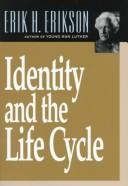 Identity and the life cycleErik H. EriksonA foundational, deeply humanistic exploration of how we become who we are across the span of a lifetime.
 Feminine PsychologyKaren Horney, M.D.A validating, intellectually rigorous dismantling of early psychoanalytic dogma that reshapes the understanding of the female mind.
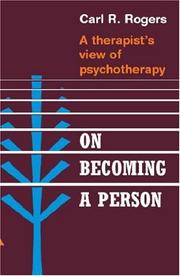 On Becoming a PersonCarl Ransom RogersA warm, deeply empathetic invitation to drop your defenses and discover the quiet power of simply being yourself.
 The farther reaches of human natureAbraham H. MaslowAn expansive, intellectually hopeful exploration of what it means to reach the absolute peak of human potential.