Books › False memory

False memory
First published 2001 · 963 pages
A relentless descent into the terrifying realization that your own mind can no longer be trusted.
What it feels like
Reading this thriller feels like being trapped in a shrinking room where the walls are made of your own darkest fears. It is a dread-soaked, propulsive experience that preys on the terrifying concept of losing control over your own thoughts and actions. The narrative moves at a breakneck pace, dragging the reader through a claustrophobic maze of paranoia, gaslighting, and psychological manipulation. The prose is sharp and visceral, designed to keep your heart rate elevated as the characters grapple with an invisible, insidious threat. It will deeply satisfy readers who love high-stakes suspense and the chilling realization that the most dangerous monsters are often the ones wearing a trusted, professional smile.
- Mood
- dread-soaked
- claustrophobic
- unsettling
- tense
- Tone
- urgent
- paranoid
- sinister
- earnest
- Pace
- propulsive
- Themes
- loss of autonomy · fragility of the mind · betrayal by authority · terror of oneself · enduring love
- The writing
- The prose is accessible and relentlessly paced, blending visceral descriptions of psychological terror with sharp, action-oriented momentum.
- The arc
- The journey begins with a creeping, inexplicable anxiety that spirals into suffocating paranoia before erupting into a desperate, adrenaline-fueled fight for survival.
- Who it's for
- Readers who crave high-stakes psychological thrillers where the greatest threat lies within the characters' own minds.
Content notes
- suicide
- sexual assault
- drug addiction
- psychological abuse
- gaslighting
- self-harm
About the book
"Martie Rhodes helps her friend Susan Jagger, who suffers from agoraphobia, attend visits to psychologist Dr. Ahriman. Martie's husband, Dusty Rhodes, tries to help his brother Skeet, by providing employment in his painting business. Skeet was in rehab for drug use, and when he first appears in the story, he is high and tries to commit suicide by jumping off a roof. Dusty decides to take him back to rehab due to drug overdose. Martie suddenly develops a mysterious case of autophobia, fear of oneself, and returns home to find herself frightened by her own reflection. Later, her condition worsens, and soon she becomes afraid of pointed objects, although she is actually afraid of the harm she might cause with them. When Dusty leaves Skeet at the rehab center, he notices a shadow lurking in his brother's room window. From this point on, strange things begin happening to both Dusty and Martie, involving Skeet, Martie's autophobia, and hypnotism. The couple eventually discovers that they've both been progressively brainwashed and programmed to obey Dr. Ahriman, a sexual psychopath who drugs and indoctrinates his patients, then either repeatedly rapes them or orders them to commit murders or suicide for his amusement. Dr. Ahriman orders Susan to commit suicide by slitting her wrists after discovering that she videotaped him having sex with her. The doctor has also programmed Skeet, which explains his inability to fully recover from drug use and distorted thinking. Dr. Ahriman establishes control, sending patients almost instantly into a detached state of consciousness by stating a name and then reading them a short haiku. He tries to justify this by stating that, by ordering certain patients to commit horrific crimes?mass murders, bombings, random shootings?he can force legislation in order to make the world a "better place." Dr. Ahriman is eventually killed by another patient, who had a fear of Keanu Reeves, based on his character in The Matrix. The woman believes that Dr. Ahriman is one of the Machine agents trying to control her. Dusty and Martie, receiving a substantial inheritance from Martie's friend Susan, slowly begin to restore their shattered lives. " -- Wikipedia.
Description from Open Library.
Books like False memory
See why they match The House of ThunderDean Ray KoontzA dizzying descent into paranoia where memory is a weapon and reality itself feels like a trap.
 The Bad PlaceDean R. KoontzA relentless, genre-bending descent into supernatural madness anchored by a fiercely loving detective duo.
 TwilightDean R. KoontzA relentless, paranoid chase thriller that weaponizes a mother's worst nightmare against a backdrop of fanatical terror.
 Mr. MurderDean Ray KoontzA relentless, paranoia-inducing thrill ride where the ultimate nightmare wears your own face.
 The Door to DecemberLeigh NicholsA relentless, rain-slicked descent into the darkest corners of the human mind and the terrifying power of a fractured psyche.
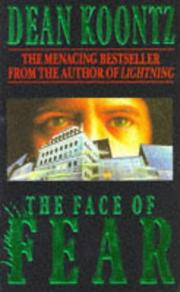 The Face of FearBrian CoffeyA claustrophobic, adrenaline-fueled descent into a high-rise nightmare where the hunter and the hunted are trapped together.