Books › Introduction to solid state physics
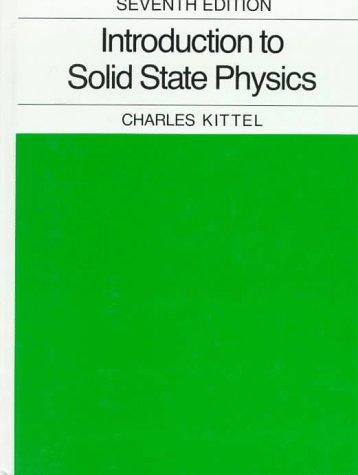
Introduction to solid state physics
First published 1953 · 766 pages
A rigorous, foundational journey into the quantum and crystalline architecture of the material world.
What it feels like
Reading this foundational text is less like reading a book and more like undertaking a rigorous apprenticeship in the architecture of matter. The pace is deliberately steady, demanding that the reader pause frequently to wrestle with dense equations and conceptual leaps. Its tone is authoritative and unapologetically academic, stripping away fluff to reveal the stark, mathematical elegance of crystal lattices, phonons, and semiconductors. The mood is one of quiet, intense intellectual focus, evoking the feeling of sitting in a chalk-dusted lecture hall late at night. While the prose is dry and utilitarian, the emotional reward is immense: a hard-won, profound clarity about how quantum mechanics dictates the macroscopic properties of the physical world. It is a demanding but essential rite of passage for physicists and materials scientists.
- Mood
- intellectual
- structured
- demanding
- illuminating
- Tone
- authoritative
- academic
- rigorous
- objective
- didactic
- Pace
- steady
- Themes
- the architecture of matter · mathematical elegance · scientific rigor · quantum to macroscopic transition
- The writing
- Dense, precise, and unapologetically mathematical, prioritizing the exact transmission of physical concepts over literary flourish.
- The arc
- Moves from the daunting complexity of abstract mathematical models to a hard-won, profound clarity about the physical universe.
- Who it's for
- Physics students, materials scientists, and engineers seeking a rigorous, foundational understanding of crystalline solids.
About the book
Includes bibliographical references and index. "Chapter 18, Nanostructures, was written by Professor Paul McEuen..."
Description from Open Library.
Books like Introduction to solid state physics
See why they match Semiconductor device fundamentalsRobert F. PierretA rigorous, methodical journey into the microscopic physics that power the modern digital world.
 Principles of electronic materials and devicesS. O. KasapA rigorous, structured journey into the microscopic physics that power our modern electronic world.
 Solid State PhysicsMohammad Abdul WahabA highly structured, objective journey into the fundamental classifications and physical properties of matter.
 Physical scienceBill W. TilleryA methodical and grounded exploration of the foundational principles governing the physical world.
 Physical chemistryP. W. AtkinsA rigorous, intellectually demanding exploration of the mathematical and physical foundations that govern chemical behavior.
 Advanced mechanics of materialsRobert Davis CookA rigorous, methodical descent into the mathematical realities of physical stress and structural integrity.