Books › Kwaidan

Kwaidan
Stories and Studies of Strange Things
312 pages
A delicate, shadow-draped journey into the eerie and sorrowful realms of Japanese folklore.
What it feels like
Reading this collection feels like sitting by a paper lantern on a humid summer night, listening to whispered secrets of the spirit world. The pace is leisurely, allowing the delicate, transparent prose to cast a quiet, lingering spell rather than relying on sudden frights. Hearn's tone is both scholarly and deeply reverent, treating these strange tales of karmic retribution, spectral musicians, and uncanny insects with a melancholic tenderness. The mood is dreamlike and shadow-draped, wrapping the reader in an atmosphere of subtle dread and tragic beauty. It is a perfect, atmospheric retreat for readers who prefer their horror to be poetic and quiet, delighting those who are drawn to the blurred boundaries between the living, the dead, and the natural world.
- Mood
- haunting
- dreamlike
- shadowy
- quiet
- atmospheric
- Tone
- reverent
- eerie
- melancholic
- scholarly
- delicate
- Pace
- leisurely
- Themes
- the boundary between life and death · karmic retribution · the uncanny in nature · cultural preservation · the power of folklore
- The writing
- Lyrical, transparent, and delicately crafted, blending journalistic observation with poetic reverence.
- The arc
- Begins with quiet curiosity and deepens into a lingering, delicate sense of the uncanny and the sorrowful.
- Who it's for
- Readers who appreciate quiet, atmospheric horror, classic folklore, and the subtle, melancholic beauty of traditional ghost stories.
Content notes
- death and dying
- ghosts and spirits
- mild body horror
- grief
About the book
"Kwaidan" translates from the Japanese as weird tales, which perfectly describes these haunting stories. This collection of supernatural tales includes a musician called upon to perform for the dead, man-eating goblins, and insects who uncannily mimic human behavior. A perfect treat for fans of the strange and otherworldly.
This collection of Japanese supernatural stories is a classic work in the field of Japanese horror.
Known primarily as an early interpreter of Japanese culture and customs, the famous writer Lafcadio Hearn also wrote ghost stories—"delicate, transparent, ghostly sketches"—about his adopted land. Many of the stories found in Kwaidan, "stories and studies of strange things," are based on Japanese tales of long ago told to him by his wife; others possibly have a Chinese origin. All have been re-colored and reshaped by Hearn's inimitable hand.
Some critics attribute Hearn's fascination with eerie tales to his partial blindness. Whatever its roots, he was clearly drawn to the hidden realms of the spirit world and to strange facts and marvels. In this collection of unforgettably haunting stories, Hearn brings together "the meeting of three ways"—the austere dreams of India, the subtle beauty of Japan and the relentless science of the Western world.
Japanese ghost and supernatural tales include:
A musician called upon to perform for the dead - Man-eating goblins - Insects who uncannily mimic human behavior
About the Author: Lafcadio Hearn (1850-1904) was born on the Greek island of Lefkas, the son of an Anglo-Irish surgeon in the British army and a Greek mother. After his parent's divorce when he was six, he was brought up in Dublin by a great aunt. At the age of nineteen, he went to America, eventually ending up in New Orleans as a newspaper reporter. His flight from Western materialism brought him to Japan in 1890, where he worked for an English newspaper, the Kobe Chronicle, and taught in various schools. In 1896, he began teaching English literature at Tokyo Imperial University, a position he held until 1903, and at Waseda University. Hearn married a samurai's daughter, Koizumi Setsu, became a Japanese citizen and a Buddhist, and changed his name to Koizumi Yakumo. At the young age of 54, he died of a heart attack. Hearn's search for beauty and tranquility, for pleasing customs and lasting values made him a confirmed Japanophile. His keen intellect, poetic imagination, and wonderful clear style permitted him to penetrate to the very essence of things Japanese. He became the great interpreter of things Japanese to the West. Hearn's most famous work is a collection of lectures entitled Japan: An Attempt at Interpretation (published posthumously in 1905). His other books on Japan include Glimpses of Unfamiliar Japan (1894), Out of the East (1895), Kokoro (1896), Gleanings in Buddha Fields (1897), Exotics and Retrospectives (1898), In Ghostly Japan (1899), Shadowings (1900), and A Japanese Miscellany (1901).
Description from Open Library.
Books like Kwaidan
See why they match Dark WaterSuzuki, KojiA beautifully crafted, damp, and dread-soaked exploration of psychological fear.
 The WeirdAnn VanderMeer and Jeff VanderMeerA massive, labyrinthine cabinet of curiosities that will permanently tilt your perception of reality.
 Collected Ghost StoriesMontague Rhodes JamesA masterclass in slow-burn dread where dusty archives and quiet country inns hide ancient, malevolent forces waiting to be disturbed.
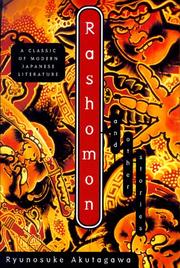 Rashomon and other storiesRyunosuke AkutagawaA masterful collection of short fiction and reflections that bridges classical traditions and modern sensibilities through highly stylized prose.
 Strange HighwaysDean Ray KoontzA twilight journey through the eerie and the macabre, where ordinary people are forced to confront their deepest regrets and darkest fears.
 RingKōji SuzukiA ticking-clock procedural that infects the reader with a creeping, inescapable sense of doom.