Books › Leaders Eat Last

Leaders Eat Last
368 pages
An earnest, story-driven exploration of why psychological safety is the biological bedrock of every great team.
What it feels like
Reading this book feels like sitting down with a deeply empathetic mentor who wants to fundamentally change how you view your workday. It moves at a steady, deliberate pace, anchoring its arguments in a mix of gripping military anecdotes, corporate case studies, and accessible evolutionary biology. The mood is inherently optimistic and reassuring, replacing the cynical view of cutthroat corporate ladders with a hopeful vision of psychological safety. The prose is conversational and persuasive, designed to make complex neurochemical concepts feel immediately relevant to your next team meeting. It is a highly purposeful read, perfect for managers, founders, or any professional yearning to transform a fragmented office into a deeply trusting, unified community.
- Mood
- purposeful
- uplifting
- reflective
- reassuring
- Tone
- earnest
- inspiring
- authoritative
- optimistic
- persuasive
- Pace
- steady
- Themes
- servant leadership · psychological safety · the biology of trust · workplace belonging · collective sacrifice
- The writing
- Clear, conversational, and heavily anecdotal, seamlessly weaving military stories and corporate case studies with accessible pop biology.
- The arc
- Begins with a sobering critique of modern corporate anxiety and builds toward an empowering, hopeful vision of empathetic leadership.
- Who it's for
- Professionals and managers who are tired of toxic corporate environments and crave a more human-centric, empathetic approach to building teams.
Content notes
- workplace stress
- military combat anecdotes
About the book
Why do only a few people get to say “I love my job?”
It seems unfair that finding fulfillment at work is like winning a lottery; that only a few lucky ones get to feel valued by their organizations, to feel like they belong.
Imagine a world where almost everyone wakes up inspired to go to work, feels trusted and valued during the day, then returns home feeling fulfilled.
This is not a crazy, idealized notion. Today, in many successful organizations, great leaders are creating environments in which people naturally work together to do remarkable things.
In his travels around the world since the publication of his bestseller Start with Why, Simon Sinek noticed that some teams were able to trust each other so deeply that they would literally put their lives on the line for each other. Other teams, no matter what incentives were offered, were doomed to infighting, fragmentation and failure. Why?
The answer became clear during a conversation with a Marine Corps general.
“Officers eat last,” he said.
Sinek watched as the most junior Marines ate first, while the most senior Marines took their place at the back of the line. What’s symbolic in the chow hall is deadly serious on the battlefield: great leaders sacrifice their own comfort—even their own survival—for the good of those in their care.
This principle has been true since the earliest tribes of hunters and gatherers. It’s not a management theory; it’s biology. Our brains and bodies evolved to help us find food, shelter, mates and especially safety. We’ve always lived in a dangerous world, facing predators and enemies at every turn. We thrived only when we felt safe among our group.
Our biology hasn’t changed in fifty thousand years, but our environment certainly has. Today’s workplaces tend to be full of cynicism, paranoia and self-interest. But the best organizations foster trust and cooperation because their leaders build what Sinek calls a Circle of Safety that separates the security inside the team from the challenges outside.
Description from Open Library.
Books like Leaders Eat Last
See why they match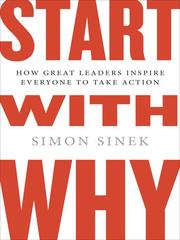 Start with whySimon SinekAn energizing masterclass in finding the beating heart behind your work and using it to inspire others.
 Find Your WhySimon SinekAn energizing, pragmatic toolkit for transforming vague professional dissatisfaction into a clear, actionable sense of purpose.
 The culture codeDaniel CoyleAn energizing masterclass in the invisible forces that transform a group of strangers into a powerhouse team.
 Radical CandorKim ScottAn energizing, pragmatic masterclass in navigating the messy human dynamics of leadership with both honesty and heart.
 MultipliersLiz WisemanAn energizing and practical guide to shifting from being the genius in the room to being the genius maker.
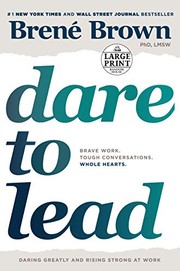 Dare to leadBrené BrownA warm, challenging invitation to drop the armor and lead with a whole heart.