Books › Libro de los seres imaginarios

Libro de los seres imaginarios
362 pages
A pocket-sized museum of human imagination, where mythical beasts serve as mirrors for our deepest philosophical curiosities.
What it feels like
Reading this collection feels like wandering through the dusty, sunlit archives of a forgotten museum. It is a meandering, leisurely experience, designed not to be devoured in a single sitting but to be dipped into whenever the mind craves a spark of wonder. The prose is characteristically elegant and erudite, presenting bizarre creatures—from the familiar dragon to the obscure Borametz—with the deadpan precision of a scholarly encyclopedia. Yet beneath this academic veneer lies a profound, dreamlike meditation on the limits of human imagination and the mysteries of the universe. It delights readers who love philosophical puzzles, mythology, and the blurring of lines between reality and fiction, offering a quiet, intellectual awe that lingers long after the book is closed.
- Mood
- dreamlike
- wondrous
- mysterious
- antiquarian
- Tone
- erudite
- whimsical
- philosophical
- deadpan
- scholarly
- Pace
- meandering
- Themes
- the limits of imagination · nature of myth · reality versus fiction · cosmic wonder
- The writing
- Precise, elegant, and deceptively simple, blending academic dryness with poetic imagination.
- The arc
- The reader moves from simple curiosity about bizarre beasts to a profound, lingering sense of cosmic awe.
- Who it's for
- Lovers of mythology, folklore, and philosophical puzzles who enjoy dipping into a book for brief, thought-provoking interludes.
Content notes
- mythological violence
About the book
The master, writing with sometime collaborator Guerrero, compiled 82 one- and two-page descriptions of everything from "The Borametz" (a Chinese "plant shaped like a lamb, covered with golden fleece") to "The Simurgh" ("an immortal bird that makes its nest in the tree of science") and "The Zaratan" (a particularly cunning whale) in An Anthology of Fantastic Zoology in 1954. He added 34 more (and illustrations) for a 1967 edition, giving it the present title, and it was published in English in 1969. This edition, with fresh translations from Borges's Collected Fictions translator Hurley, and new illustrations from Caldecott-winner Sis, gives the beings new life. They prove the perfect foils for classic Borgesian musings on everything from biblical etymology to the underworld, giving the creatures particularly (and, via Sis, whimsically) vivid and perfectly scaled shape. "We do not know what the dragon means, just as we do not know the meaning of the universe," Borges (1899-1986) and Guerrero write in a preface, and the genius of this book is that it seems to easily contain the latter within it.
Description from Open Library.
Books like Libro de los seres imaginarios
See why they match Collected FictionsJorge Luis BorgesA dizzying descent into a library of infinite mirrors, where reality, time, and identity constantly shift and dissolve.
 LabyrinthsJorge Luis BorgesA dizzying descent into an infinite library of philosophical paradoxes, mirrors, and metaphysical mysteries.
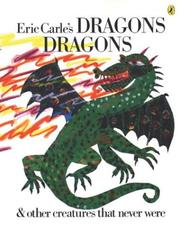 Dragons dragons and other creatures that never wereEric Carle and Laura WhippleA vibrant, lyrical journey through the realm of imagination, where mythical beasts leap from the page in bold colors and rhythmic verse.
 Codex SeraphinianusOutletA surreal, beautiful visual encyclopedia of an unknown world written in an unreadable language.
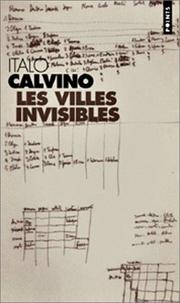 Le città invisibiliItalo CalvinoA surreal, kaleidoscopic journey through imaginary metropolises that ultimately maps the contours of human memory and desire.
 Encyclopedia of things that never wereMichael F. PageA beautifully illustrated, scholarly wander through the collective imagination of humanity's greatest myths, monsters, and magical realms.