Books › Lost in math

Lost in math
384 pages
A sharp, witty dismantling of the aesthetic dogmas and beautiful theories currently holding back modern physics.
What it feels like
Reading this feels like grabbing a drink with a brilliant, slightly exasperated physicist at a conference bar while she pulls back the curtain on her own field. It is a brisk, intellectually stimulating experience that strips away the romanticized veneer of modern science to reveal the messy, deeply human biases underneath. The prose is sharp, conversational, and laced with a dry wit that makes complex theoretical concepts surprisingly accessible. Instead of marveling at the elegant mysteries of the universe, you are invited to question the very metrics by which we judge scientific truth. It is a deeply satisfying read for skeptics and science lovers who prefer the cold, hard friction of reality over the comforting illusion of mathematical beauty.
- Mood
- intellectually stimulating
- disillusioned
- inquisitive
- Tone
- wry
- skeptical
- conversational
- blunt
- provocative
- Pace
- brisk
- Themes
- the illusion of elegance · scientific stagnation · the danger of dogma · intellectual honesty · aesthetics vs. reality
- The writing
- Sharp, punchy, and refreshingly devoid of academic jargon, laced with a dry, unapologetic wit.
- The arc
- Moves from a shared frustration with academic echo chambers to a sobering but refreshing demand for intellectual honesty.
- Who it's for
- Skeptical science enthusiasts who love seeing entrenched academic dogmas dismantled by an insider.
About the book
"Whether pondering black holes or predicting discoveries at CERN, physicists believe the best theories are beautiful, natural, and elegant, and this standard separates popular theories from disposable ones. This is why, Sabine Hossenfelder argues, we have not seen a major breakthrough in the foundations of physics for more than four decades. The belief in beauty has become so dogmatic that it now conflicts with scientific objectivity: observation has been unable to confirm mindboggling theories, like supersymmetry or grand unification, invented by physicists based on aesthetic criteria. Worse, these "too good to not be true" theories are actually untestable and they have left the field in a cul-de-sac. To escape, physicists must rethink their methods. Only by embracing reality as it is can science discover the truth"--
Description from Open Library.
Books like Lost in math
See why they match A beautiful questionFrank WilczekA mind-shifting voyage through the deep logic of the universe, revealing the profound harmony where science and art converge.
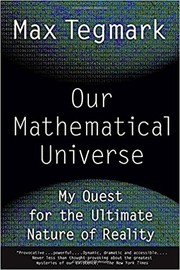 Our Mathematical UniverseMax TegmarkA dizzying, enthusiastic plunge into the radical idea that the cosmos isn't just described by math, but is made of it.
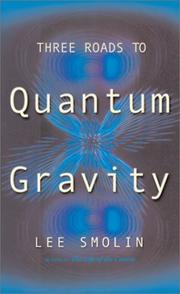 Three Roads to Quantum GravityLee SmolinAn awe-inspiring and deeply human journey to the very edge of our understanding of space, time, and reality.
 The Trouble With PhysicsLee SmolinA passionate, accessible critique of modern theoretical physics that challenges the scientific establishment and champions independent thought.
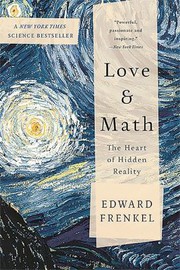 Love and MathEdward FrenkelA passionate love letter to the hidden, artistic beauty of the universe, wrapped in a story of personal resilience.
 Is God a mathematician?Mario LivioA contemplative journey through history and logic that asks whether the universe is fundamentally built on numbers.