Books › Lost in the taiga
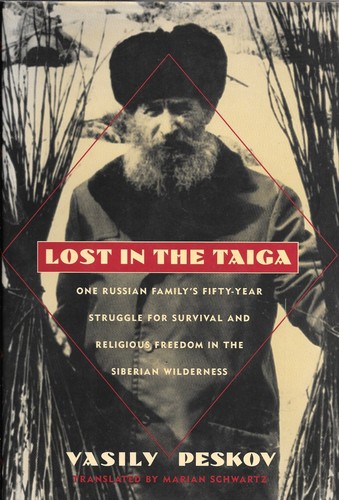
Lost in the taiga
254 pages
A stark, mesmerizing window into absolute isolation and the astonishing limits of human endurance.
What it feels like
Reading this book feels like stepping into a time capsule buried beneath the Siberian snow. It is a quiet, steady immersion into a world where modernity simply does not exist, anchored by prose that is as clear and unsparing as the taiga itself. The narrative unfolds with a respectful, journalistic distance that gradually thaws into deep empathy, mirroring the author's own years-long process of earning the family's trust. You are enveloped in a mood of stark isolation and awe, feeling the biting cold and the profound silence of the wilderness. It will deeply satisfy readers who are drawn to tales of extreme survival, off-the-grid existence, and the poignant clash between ancient devotion and the relentless march of time.
- Mood
- stark
- isolating
- quiet
- melancholic
- awe-inspiring
- Tone
- respectful
- observant
- empathetic
- journalistic
- awe-struck
- Pace
- steady
- Themes
- extreme survival · absolute isolation · religious devotion · clash of eras · human endurance
- The writing
- Clear, reportorial, and deeply grounded in the sensory details of the unforgiving Siberian landscape.
- The arc
- Begins with the breathless wonder of an impossible discovery and settles into a poignant, bittersweet meditation on a vanishing way of life.
- Who it's for
- Readers who are captivated by extreme off-the-grid survival, historical time capsules, and the quiet resilience of the human spirit.
Content notes
- starvation
- death of family members
- animal death
- extreme poverty
About the book
In the late 1970s, a Russian pilot flying over a remote, mountainous stretch of the Siberian taiga, the vast subarctic forest, spotted a tilled field hundreds of miles from any known settlement. He could not believe his eyes; in this forbidding part of the world, human habitation was a statistical impossibility.
A team of scientists parachuted in and were stunned by what they found: a primitive wood cabin, and a family dressed in rags that spoke, thought, and lived in the manner of seventeenth-century Russian peasants during the reign of Tsar Peter the Great. How they come here, how they survived, and how they ultimately prevailed in a climate of unimaginable adversity make for one of the most extraordinary human adventures of this century.
Acclaimed Pravda journalist Vasily Peskov has visited this family once a year for the past twelve years, gaining their trust and learning their story. It begins in the late seventeenth century, when a community of Russian Orthodox fundamentalists made a two-thousand-mile odyssey from the Ukraine to the depths of the Siberian taiga to escape religious persecution at the hands of Peter the Great, who sought to reform the Russian Orthodox Church.
For nearly 250 years, this band of "Old Believers" kept the outside world at bay, but in the 1930s Stalin's brutal collectivization program swept East and threw them from their land. But the young family of Karp Osipovich Lykov refused to abandon the only way of life they knew, and fled even deeper into the desolate Siberian hinterland. By the time Peskov came to know them, they had been alone for more than fifty years, surviving solely on what they could harvest, hunt, and build by their own means.
The sole surviving family member, the daughter Agafia, lives by herself in the Lykov family cabin to this day.
In Lost in the Taiga, Peskov brings to life the Lykovs' faith, their doubt, and their epic struggle against an unyielding wilderness, even as he pays homage to a natural habitat that is being despoiled so rapidly it may soon no longer exist. Peskov's account has captured the imagination of the world: published in ten countries on three continents, it is being made into a movie by internationally acclaimed filmmaker Jean-Jacques Annaud.
Description from Open Library.
Books like Lost in the taiga
See why they match Dead MountainDonnie EicharA chilling, obsessive descent into one of history's most haunting frozen mysteries.
 Coming Out of the IceVictor HermanAn unflinching, harrowing memoir of survival and romance forged in the darkest, coldest depths of Soviet exile.
 One man's wildernessRichard Proenneke and Sam KeithA quiet, deeply satisfying immersion into the ultimate fantasy of leaving society behind to build a life by hand in the wild.
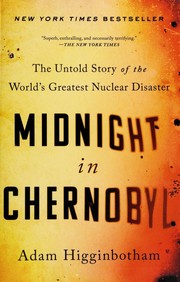 Midnight in ChernobylAdam HigginbothamA dread-inducing, cinematic descent into a man-made apocalypse that reads like a terrifying political thriller.
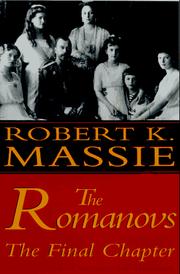 The RomanovsRobert K. MassieA suspenseful blend of history and forensic science that unravels a century-old royal mystery.
 Into the WildJon KrakauerA haunting, investigative journey into the heart of American wanderlust and the fatal price of absolute freedom.