Books › Philosophische Untersuchungen
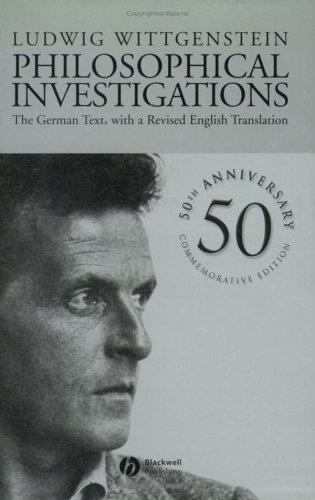
Philosophische Untersuchungen
First published 1953 · 516 pages
A therapeutic dismantling of the conceptual traps we build with our own words.
What it feels like
Reading this book feels less like absorbing a philosophical treatise and more like sitting in a room with a restless, brilliant mind as it interrogates itself. The text unfolds in a meandering series of numbered remarks, looping back on themselves, asking questions, and proposing strange little thought experiments about builders, beetles in boxes, and games. It is a deeply disorienting experience at first, as it actively resists giving you a grand, unifying theory of anything. Instead, it acts as a kind of intellectual therapy. The prose is deceptively simple and conversational, yet rigorously demanding. It will delight patient readers who love to dismantle their own assumptions, leaving them with a profound, quiet appreciation for the messy reality of everyday language.
- Mood
- contemplative
- disorienting
- intellectual
- clarifying
- Tone
- inquisitive
- conversational
- rigorous
- self-correcting
- Pace
- meandering
- Themes
- the limits of language · meaning as use · dismantling illusions · the nature of understanding · ordinary life
- The writing
- Aphoristic, dialogic, and deceptively simple, relying heavily on analogies, thought experiments, and relentless questioning.
- The arc
- Moves from a state of deep conceptual entanglement and philosophical confusion toward a quiet, therapeutic clarity.
- Who it's for
- Patient thinkers who enjoy dismantling their own assumptions and wrestling with the fundamental mechanics of communication.
About the book
Posthumously published work by Wittgenstein, in which he came to overthrow some number of his earlier ideas as published in the Tractatus.
Description from Open Library.
Books like Philosophische Untersuchungen
See why they match Tractatus logico-philosophicusLudwig WittgensteinA crystalline, numbered descent into the absolute limits of what can be thought and spoken.
 How to do things with wordsJ. L. AustinA witty, methodical dismantling of the idea that words merely describe the world, revealing how they actively construct it.
 Speech actsJohn R. SearleA rigorous, cerebral exploration of how language functions not just to describe the world, but to act upon it.
 Twilight of the Idols and The AntichristFriedrich Wilhelm NietzscheA blistering, hammer-swinging assault on everything you thought was sacred, true, or good.
 Naming and necessitySaul A. KripkeA deceptively conversational masterclass in logic that completely rewrites the rules of how words connect to the world.
 The Problems of PhilosophyBertrand RussellA crisp, mind-expanding journey that dismantles your everyday assumptions and rebuilds your understanding of reality from the ground up.