Books › Portrait of a Killer
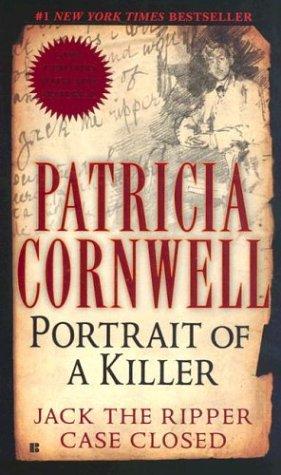
Portrait of a Killer
Jack the Ripper Case Closed
First published 2002 · 562 pages
A dark, obsessive deep-dive into Victorian London that applies modern forensic science to history's most infamous cold case.
What it feels like
Reading this book feels like stepping into a dimly lit autopsy room where history and modern science collide. The narrative moves at a steady, methodical pace, driven by an almost obsessive need to solve a century-old mystery. The mood is undeniably grim and dread-soaked, immersing you in the fog and squalor of Victorian London before pulling you under the harsh, clinical lights of twenty-first-century forensic analysis. The prose is assertive and dense with technical detail, reflecting the author's background in crime fiction and forensic research. It is a deeply unsettling experience that explores the dark intersection of art, psychopathy, and violence. True crime enthusiasts who crave bold theories and meticulous, procedural deep-dives will find themselves completely absorbed by this chilling historical investigation.
- Mood
- unsettling
- clinical
- dread-soaked
- atmospheric
- Tone
- authoritative
- obsessive
- analytical
- grim
- assertive
- Pace
- steady
- Themes
- forensic obsession · psychology of violence · art as confession · historical true crime
- The writing
- Assertive and highly detailed, blending the pacing of a procedural with the dense, clinical language of a forensic report.
- The arc
- Begins with atmospheric historical intrigue and narrows into a chilling, obsessive pursuit of a single suspect.
- Who it's for
- Readers who love true crime, forensic science, and bold historical theories will devour this meticulous investigation.
Content notes
- graphic violence
- mutilation
- sexual violence
- misogyny
- medical trauma
About the book
"Between August and November 1888, at least seven women were murdered in London's Whitechapel area. The gruesome nature of their deaths caused panic and fear in the East End for months, and gave rise to the sobriquet that was to become shorthand for a serial killer - Jack the Ripper.".
"For over a hundred years the murders have remained among the world's greatest unsolved crimes, and a wealth of theories have been posited which have pointed the finger at royalty, a barber, a doctor, a woman and an artist.
Using her formidable range of forensic and technical skills, Patricia Cornwell has applied the rigorous discipline of twenty-first-century police investigation to the extant material, and here presents the hard evidence that the perpetrator was the world-famous artist Walter Sickert.".
"By using techniques unknown in the late Victorian age, Patricia Cornwell has exposed Sickert as the author of the infamous Ripper letters to the Metropolitan Police. Her detailed analysis of his paintings shows how his art continually depicted his horrific mutilation of his victims, and her examination of this man's birth defects, the consequent genital surgical interventions and their effects on his upbringing presents a casebook example of how a psychopathic killer is created."--BOOK JACKET.
Description from Open Library.
Books like Portrait of a Killer
See why they match The FiveHallie RubenholdA devastating and deeply empathetic historical reclamation that shifts the focus from a notorious killer to the vibrant, untold lives of his victims.
 Dust and ShadowLyndsay FayeA fog-drenched, meticulously crafted Victorian procedural that pits cold logic against visceral, real-world horror.
 The Suspicions of Mr. WhicherKate SummerscaleA grim, historical deep-dive into a shocking Victorian murder and the tragic toll it took on the man who tried to solve it.
 Stalking Jack the RipperKerri ManiscalcoA fog-drenched, blood-spattered romp through Victorian London that balances gruesome forensic science with swoony romantic banter.
 The Stranger Beside MeAnn RuleA chilling, intimate descent into the sickening realization that a trusted friend is actually a monster.
 From hellAlan Moore and Eddie CampbellA suffocating, meticulously researched descent into Victorian grime that maps the architectural blueprint of modern madness.