Books › Psycho-cybernetics

Psycho-cybernetics
First published 1960 · 336 pages
A pragmatic, mid-century manual for rewiring your self-image and steering your mind toward success.
What it feels like
Reading this book feels like sitting in the office of a wise, mid-century doctor who is patiently explaining the mechanics of your own mind. The pace is steady and methodical, building a compelling case for how our self-image acts as an internal thermostat dictating our success and happiness. Stripped of modern self-help fluff, the tone is deeply pragmatic, earnest, and encouraging, relying on the fascinating analogy of the brain as a goal-seeking servo-mechanism. The mood is quietly empowering, inviting you into a space of focused reflection and mental rehearsal. It delights readers who crave foundational, actionable psychology, specifically those who want to understand the literal machinery of belief and self-sabotage in order to systematically steer their lives toward peace of mind.
- Mood
- empowering
- reflective
- focused
- grounded
- Tone
- pragmatic
- encouraging
- authoritative
- earnest
- clinical
- Pace
- steady
- Themes
- self-image transformation · mental rehearsal · overcoming self-sabotage · the mechanics of belief · goal-oriented living
- The writing
- Clear, mid-century pragmatic, and highly accessible, relying heavily on mechanical analogies to explain human psychology.
- The arc
- Moves from a state of perceived limitation and frustration to a profound sense of systematic empowerment and mental clarity.
- Who it's for
- Readers seeking foundational, no-nonsense self-improvement strategies rooted in practical psychology rather than mystical thinking.
Content notes
- discussions of low self-esteem
- references to plastic surgery
About the book
Cybernetics (loosely translated from the Greek): “a helmsman who steers his ship to port.” Psycho-Cybernetics is a term coined by Dr. Maxwell Maltz, which means, “steering your mind to a productive, useful goal so you can reach the greatest port in the world, peace of mind.”
Since its first publication in 1960, Maltz’s landmark bestseller has inspired and enhanced the lives of more than 30 million readers. In this updated edition, with a new introduction and editorial commentary by Matt Furey, president of the Psycho-Cybernetics Foundation, the original text has been annotated and amplified to make Maltz’s message even more relevant for the contemporary reader.
“Before the mind can work efficiently, we must develop our perception of the outcomes we expect to reach. Maxwell Maltz calls this Psycho-Cybernetics; when the mind has a defined target it can focus and direct and refocus and redirect until it reaches its intended goal.” —Tony Robbins
Maltz was the first researcher and author to explain how the self-image (a term he popularized) has complete control over an individual’s ability to achieve (or fail to achieve) any goal. And he developed techniques for improving and managing self-image—visualization, mental rehearsal, relaxation—which have informed and inspired countless motivational gurus, sports psychologists, and self-help practitioners for more than fifty years.
The teachings of Psycho-Cybernetics are timeless because they are based on solid science and provide a prescription for thinking and acting that lead to quantifiable results.
Description from Open Library.
Books like Psycho-cybernetics
See why they match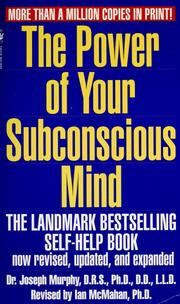 The Power of Your Subconscious MindJoseph MurphyA reassuring, vintage guide to unlocking the hidden, miraculous potential of your own thoughts.
 The Magic of Thinking BigDavid J. SchwartzAn enthusiastic, classic kick in the pants that dares you to dismantle your own limitations and dream on a grander scale.
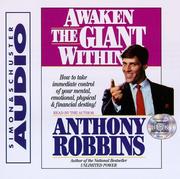 Awaken the Giant WithinRobbins, AnthonyA high-octane shot of adrenaline for the soul, demanding you stop settling and start taking immediate control of your life.
 The magic of believingClaude M. BristolA vintage, no-nonsense guide to unlocking the hidden power of your own mind to shape your reality.
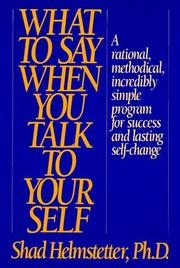 What to Say When You Talk to Your SelfShad HelmstetterA practical, encouraging manual for rewiring the subconscious mind and turning your inner critic into an inner coach.
 You can heal your lifeLouise HayA warm, spiritual embrace that teaches you how to rewrite the internal scripts keeping you sick or stuck.