Books › Quicksilver
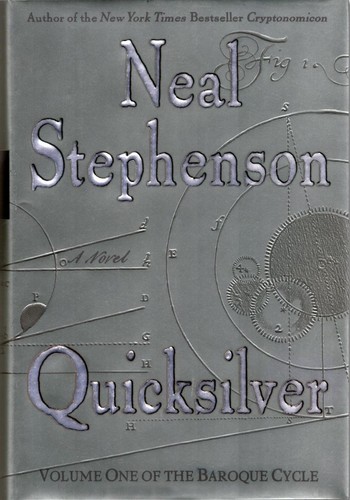
Quicksilver
Volume One of The Baroque Cycle
1145 pages
A sprawling, mud-splattered intellectual romp through the chaotic birth of the scientific revolution.
What it feels like
Reading this massive tome feels like being dragged through the mud and brilliance of the late seventeenth century by a wildly enthusiastic, hyper-intelligent tour guide. It is a gloriously meandering experience, demanding patience as it detours into exhaustive lectures on cryptography, economics, and the mechanics of early scientific instruments. Yet, beneath the dense, encyclopedic prose lies a deeply irreverent and exuberant spirit. The atmosphere is a chaotic blend of grimy London streets, plague-ridden alleys, and the electric hum of the Royal Society's intellectual ferment. It is not a book you breeze through, but rather a world you inhabit—a dizzying, immersive playground for readers who delight in the messy, complicated collision of alchemy, politics, and the birth of modern reason.
- Mood
- chaotic
- grimy
- intellectually electric
- sprawling
- Tone
- encyclopedic
- wry
- exuberant
- irreverent
- intellectual
- Pace
- meandering
- Themes
- the birth of reason · collision of alchemy and science · the chaos of progress · systems and networks
- The writing
- Dense, unapologetically verbose, and peppered with anachronistic wit and exhaustive technical detail.
- The arc
- Moves from overwhelming historical disorientation to a profound, dizzying awe at the messy dawn of the modern world.
- Who it's for
- Patient, curious readers who love massive, encyclopedic novels that treat the history of science and economics as a thrilling, mud-splattered adventure.
Content notes
- graphic violence
- disease and plague
- sexual content
- gore
About the book
Volume One of The Baroque Cycle (Not to be confused with Quicksilver: The Baroque Cycle #1)
Quicksilver is a massive, exuberant and wildly ambitious historical novel that's also Neal Stephenson's eagerly awaited prequel to Cryptonomicon--his pyrotechnic reworking of the 20th century, from World War II codebreaking and disinformation to the latest issues of Internet data privacy.
Quicksilver, "Volume One of the Baroque Cycle", backtracks to another time of high intellectual ferment: the late 17th century, with the natural philosophers of England's newly formed Royal Society questioning the universe and dissecting everything that moves. One founding member, the Rev John Wilkins, really did write science fiction and a book on cryptography--but this isn't history as we know it, for here his code book is called not Mercury but Cryptonomicon. And although the key political schemers of Charles II's government still have initials spelling the word CABAL, their names are all different...
While towering geniuses like Newton and Leibniz decode nature itself, bizarre adventures (merely beginning with the Great Plague and Great Fire) happen to the fictional Royal Society member Daniel Waterhouse, who knows everyone but isn't quite bright enough for cutting-edge science. Two generations of Daniel's family appear in Cryptonomicon, as does a descendant of the Shaftoes who here are soldiers and vagabonds. Other links include the island realm of Qwghlm with its impossible language and the mysterious, seemingly ageless alchemist Enoch Root.
As the reign of Charles II gives way to that of James II and then William of Orange, Stephenson traces the complex lines of finance and power that form the 17th-century Internet. Gold and silver, lead and (repeatedly) mercury or quicksilver flow in glittering patterns between centres of marketing and intrigue in England, Germany, France and Holland. Paper flows as well: stocks, shares, scams and letters holding layers of concealed code messages. Binary code? Yes, even that had already been invented and described by Francis Bacon.
Description from Open Library.
Books like Quicksilver
See why they match King of the VagabondsNeal StephensonA sweeping, swashbuckling historical epic that balances gritty street-level survival with the grand, high-stakes birth of modern finance.
 System of the WorldNeal StephensonA massive, brain-bending plunge into the chaotic birth of the modern world, where alchemy, economics, and espionage collide.
 The Difference EngineWilliam GibsonA soot-choked, paranoid plunge into a Victorian era where the information age arrived a century early.
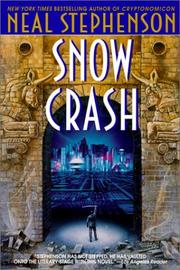 Snow CrashNeal, StephensonA hyper-kinetic, neon-lit joyride through a corporate-owned dystopia where pizza delivery is a high-stakes extreme sport and language is a literal virus.
 Islands in the NetBruce SterlingA globe-trotting, idea-dense plunge into the dark, data-pirated underbelly of a seemingly utopian corporate future.
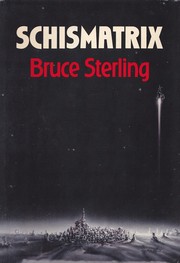 SchismatrixBruce SterlingA dizzying, decades-spanning plunge into a post-human solar system where flesh and machine wage a relentless war for the future of evolution.