Books › Robbie

Robbie
35 pages
A gentle, foundational sci-fi tale that dismantles the fear of the unknown through the pure, unbreakable bond between a child and her mechanical caretaker.
What it feels like
Reading this story feels like stepping into the golden age of optimistic science fiction, where technology is approached with curiosity rather than dread. The narrative unfolds at a steady, deliberate pace, anchoring its philosophical questions about humanity and prejudice in the deeply emotional, innocent bond between a young girl and her mechanical nursemaid. Asimov's prose is characteristically clear and unadorned, stepping out of the way to let the quiet warmth and subtle domestic tension shine through. The mood shifts from idyllic childhood play to the aching anxiety of separation, ultimately building toward a deeply comforting resolution. It is a perfect read for those who love gentle, thought-provoking sci-fi that champions empathy over fear, offering a tender counter-narrative to the classic Frankenstein complex.
- Mood
- heartwarming
- innocent
- comforting
- subtly tense
- Tone
- earnest
- gentle
- philosophical
- nostalgic
- Pace
- steady
- Themes
- human-machine connection · technophobia and prejudice · childhood innocence · unconditional love
- The writing
- Clear, straightforward, and functional, prioritizing philosophical ideas and emotional resonance over stylistic flourish.
- The arc
- Moves from innocent joy to the aching anxiety of separation, culminating in a deeply validating and heartwarming reunion.
- Who it's for
- Readers who enjoy classic, optimistic science fiction that explores the ethical and emotional intersections of humanity and technology.
Content notes
- separation anxiety
- child distress
About the book
"Robbie" is a science fiction short story by American writer Isaac Asimov. It was his first robot story and writing commenced on June 10, 1939. It was first published in the September 1940 issue Super Science Stories magazine as "Strange Playfellow", a title that was chosen by editor Frederik Pohl and described as "distasteful" by Asimov. A revised version of "Robbie" was reprinted under Asimov's original title in the collections I, Robot (1950), The Complete Robot (1982), and Robot Visions (1990). "Robbie" was the fourteenth story written by Asimov, and the ninth to be published. The story is also part of Asimov's Robot series, and was the first of Asimov's positronic robot stories to see publication.
The story centers on the technophobia that surrounds robots, and how it is misplaced. Almost all previously published science fiction stories featuring robots followed the theme 'robot turns against creator'; Asimov has consistently held the belief that the Frankenstein complex was a misplaced fear, and the majority of his works attempted to provide examples of the help that robots could provide humanity.
In 2016 Robbie won a retrospective 1941 Hugo Award for best short story.
Description from Open Library.
Books like Robbie
See why they match Robot VisionsIsaac AsimovA nostalgic, intellectually stimulating journey through the ethical puzzles of artificial consciousness.
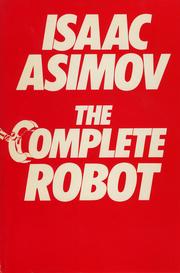 The Complete RobotIsaac AsimovA nostalgic, puzzle-box exploration of artificial minds that ultimately holds a mirror up to human nature.
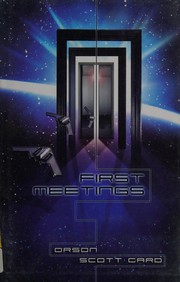 First meetingsOrson Scott CardA thoughtful, dialogue-driven exploration of the minds and moments that shaped a legendary sci-fi universe.
 The return of the Black WidowersPerseusA clever, episodic collection of urban puzzles and speculative mysteries that invites the reader to play detective.
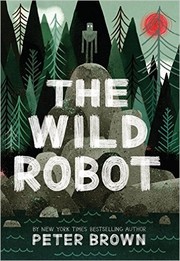 The Wild RobotPeter BrownA gentle, philosophical exploration of what it means to be alive, told through the eyes of a machine learning to love the wilderness.
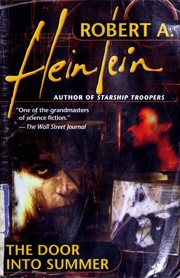 The Door into SummerRobert A. HeinleinA clever, cozy time-travel puzzle fueled by mid-century optimism, engineering competence, and the search for a warmer tomorrow.