Books › Spillover
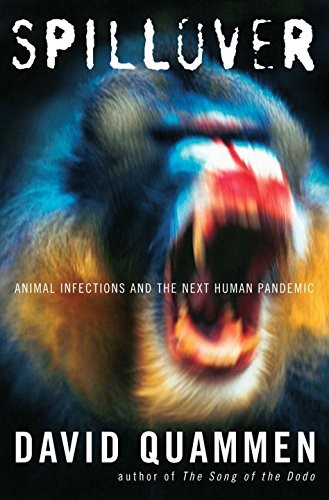
Spillover
Animal Infections and the Next Human Pandemic
624 pages
A globe-trotting scientific thriller that reveals the terrifying, invisible threads connecting human civilization to the deepest, darkest corners of the natural world.
What it feels like
Reading this book feels like shadowing a brilliant, slightly cynical detective on a global hunt for an invisible serial killer. It blends the propulsive pacing of a medical thriller with the rigorous intellect of top-tier science journalism, dragging you from bat caves in China to dense Congolese jungles. The prose is vivid and accessible, translating dense epidemiological concepts into gripping narrative beats. As you turn the pages, a profound sense of dread slowly creeps in, mingling with sheer awe at the complexity of the natural world. It is a deeply sobering experience that fundamentally alters how you view a simple cough or a walk in the woods. This is perfect for readers who love their science served with a side of existential terror and relentless curiosity.
- Mood
- dread-soaked
- fascinating
- suspenseful
- sobering
- Tone
- urgent
- investigative
- authoritative
- wry
- ominous
- Pace
- propulsive
- Themes
- ecological interconnectedness · human hubris · the invisible natural world · fragility of civilization · scientific pursuit
- The writing
- Vivid and narrative-driven, seamlessly weaving complex epidemiological science into gripping, boots-on-the-ground travelogue.
- The arc
- Begins with the thrilling curiosity of a global detective story and slowly descends into a chilling, inevitable dread about the future of humanity.
- Who it's for
- Readers who devour narrative nonfiction that reads like a thriller, especially those fascinated by biology, ecology, and the terrifying power of nature.
Content notes
- pandemic anxiety
- animal death
- medical trauma
- graphic descriptions of illness
- gore
About the book
This work examines the emergence and causes of new diseases all over the world, describing a process called "spillover" where illness originates in wild animals before being passed to humans and discusses the potential for the next huge pandemic. The emergence of strange new diseases is a frightening problem that seems to be getting worse. In this age of speedy travel, it threatens a worldwide pandemic. We hear news reports of Ebola, SARS, AIDS, and something called Hendra killing horses and people in Australia; but those reports miss the big truth that such phenomena are part of a single pattern. The bugs that transmit these diseases share one thing: they originate in wild animals and pass to humans by a process called spillover. As globalization spreads and as we destroy the ancient ecosystems, penetrating ever deeper into the furthest reaches of the planet, we encounter strange and dangerous infections that originate in animals but can be transmitted to humans. It is reckoned that at least 60% of our infections diseases derive from animals. Diseases that were contained are being set free and the results are potentially catastrophic. The author tracks this subject around the world. He recounts adventures in the field, netting bats in China, trapping monkeys in Bangladesh, stalking gorillas in the Congo, with the world's leading disease scientists. He takes the reader along on this quest to learn how, where from, and why these diseases emerge, and he asks the terrifying question: What might the next big one be?
Description from Open Library.
Books like Spillover
See why they match A planet of virusesCarl ZimmerA mind-expanding journey into the microscopic forces that shape our DNA, our environment, and our ultimate fate.
 The viral stormNathan D. WolfeA thrilling, high-stakes journey into the microscopic forces that have shaped human history and the bold science racing to secure our future.
 The coming plagueLaurie GarrettA meticulously researched, dread-inducing journey into the invisible wars between humanity and microbes that reads like a prophetic thriller.
 The Hot ZoneRichard PrestonA terrifying, true-life medical thriller that makes the microscopic world feel like an apex predator.
 The Sixth ExtinctionElizabeth KolbertA sobering, globe-trotting journey through deep time and fragile ecosystems that fundamentally alters how you view humanity's footprint.
 ScaleGeoffrey B. WestA mind-expanding journey that reveals the hidden mathematical scaffolding holding up the natural and human-made world.