Books › Statistics: an introductory analysis

Statistics: an introductory analysis
First published 1964 · 1130 pages
A methodical, mid-century journey into the foundational logic of numbers, probability, and empirical truth.
What it feels like
Reading this classic text feels like stepping into a quiet, mid-century university library, armed with a freshly sharpened pencil and a block of graph paper. The pace is deliberately steady, demanding focus as it builds complex analytical frameworks from foundational logic. There is no narrative rush here; instead, the atmosphere is one of structured intellectual rigor and quiet concentration. The prose is unadorned and objective, serving purely as a clear pane of glass through which to view mathematical truths. It offers the distinct, hard-won satisfaction of watching abstract formulas click into practical understanding. This is a deeply grounding experience for the diligent student or researcher who finds comfort in empirical certainty, methodical problem-solving, and the elegant architecture of statistical theory.
- Mood
- focused
- structured
- quiet
- intellectual
- Tone
- academic
- methodical
- objective
- instructive
- Pace
- steady
- Themes
- mathematical certainty · foundational logic · empirical analysis · problem-solving
- The writing
- Unadorned, precise, and highly structured, prioritizing mathematical clarity over stylistic flourish.
- The arc
- Moves from the daunting complexity of raw data to the quiet satisfaction of analytical clarity.
- Who it's for
- Diligent students and researchers seeking a classic, rigorous grounding in statistical theory.
About the book
Reprint. Originally published: New York: Harper & Row, 1967.
Description from Open Library.
Books like Statistics: an introductory analysis
See why they match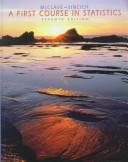 A first course in statisticsJames T. McClave and Terry SincichA structured, methodical journey into the mechanics of data and probability.
 Statistics for management and economicsWilliam MendenhallA rigorous, methodical immersion into the foundational tools of quantitative analysis and data-driven decision making.
 Biostatistical analysisJerrold H. ZarA rigorous, foundational anchor that transforms daunting numerical data into clear, actionable biological insights.
- Basic statisticsChris SpatzA patient, structured guide that transforms the daunting world of numbers into an accessible toolkit for understanding reality.
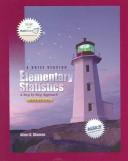 Elementary StatisticsAllan BlumanA methodical, reassuring guide that transforms the daunting world of data into manageable, logical steps.
- Statistical concepts for the behavioral sciencesHarold O. KiessA methodical, clear-eyed guide that transforms intimidating data into accessible tools for understanding human behavior.