Books › Team of Teams

Team of Teams
New Rules of Engagement for a Complex World
304 pages
A high-stakes masterclass in dismantling bureaucracy to build agile, resilient networks in an unpredictable world.
What it feels like
Reading this book feels like sitting in a high-stakes briefing room where military history meets cutting-edge organizational theory. The pace is brisk, propelled by gripping anecdotes from the front lines of the War on Terror, hospital emergency rooms, and NASA control centers. It carries an authoritative yet deeply pragmatic tone, stripping away the comfort of traditional hierarchies to expose the urgent need for adaptability. The mood is dynamic and intellectually stimulating, immersing the reader in the tension of complex, fast-moving environments before offering the relief of a clear, actionable framework. Written in crisp, structured prose, it is a deeply empowering experience for leaders, managers, and innovators who are eager to transform rigid bureaucracies into resilient, interconnected networks built on radical trust.
- Mood
- high-stakes
- focused
- dynamic
- intellectually stimulating
- Tone
- authoritative
- analytical
- pragmatic
- urgent
- reflective
- Pace
- brisk
- Themes
- adaptability in chaos · decentralized leadership · trust and transparency · overcoming bureaucratic inertia · navigating complexity
- The writing
- Clear, structured, and anecdote-rich, blending military precision with accessible business theory.
- The arc
- Moves from the overwhelming pressure of a failing, rigid system to the empowering realization of a new, adaptable paradigm.
- Who it's for
- Leaders, managers, and organizational thinkers who want to build agile, resilient teams in fast-paced environments.
Content notes
- military conflict
- terrorism references
About the book
As commander of Joint Special Operations Command (JSOC), General Stanley McChrystal played a crucial role in the War on Terror. But when he took the helm in 2004, America was losing that war badly: despite vastly inferior resources and technology, Al Qaeda was outmaneuvering America's most elite warriors. McChrystal came to realize that today's faster, more interdependent world had overwhelmed the conventional, top-down hierarchy of the U.S. military. Al Qaeda had seen the future: a decentralized network that could move quickly and strike ruthlessly. To defeat such an enemy, JSOC would have to discard a century of management wisdom, and pivot from a pursuit of mechanical efficiency to organic adaptability. Under McChrystal's leadership, JSOC remade itself, in the midst of a grueling war, into something entirely new: a network that combined robust centralized communication with decentralized managerial authority. As a result, they beat back Al Qaeda. In this book, McChrystal shows not only how the military made that transition, but also how similar shifts are possible in all organizations, from large companies to startups to charities to governments. In a turbulent world, the best organizations think and act like a team of teams, embracing small groups that combine the freedom to experiment with a relentless drive to share what they've learned. Drawing on a wealth of evidence from his military career, the private sector, and sources as diverse as hospital emergency rooms and NASA's space program, McChrystal frames the existential challenge facing today's organizations, and proposes a compelling, effective solution.
Description from Open Library.
Books like Team of Teams
See why they match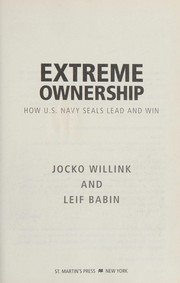 Extreme ownershipJocko Willink and Leif BabinA high-octane, no-excuses masterclass in accountability that hits like a cold shower and leaves you ready to conquer the day.
 The culture codeDaniel CoyleAn energizing masterclass in the invisible forces that transform a group of strangers into a powerhouse team.
 Call Sign ChaosBing WestA masterclass in leadership forged in the crucible of modern warfare, delivered with the blunt clarity of a seasoned commander.
 Up the organizationTownsend, RobertA delightfully blunt, A-to-Z survival guide for dismantling corporate bureaucracy and injecting common sense back into the workplace.
 Team TopologiesMatthew Skelton and Manuel PaisA clarifying blueprint for untangling organizational chaos and building software teams that actually work well together.
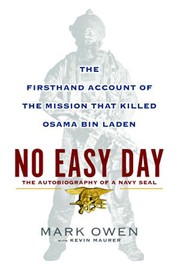 No Easy DayMark Owen and Kevin MaurerA gripping, boots-on-the-ground plunge into the grueling training and high-stakes reality of elite military operators.