Books › The American dream
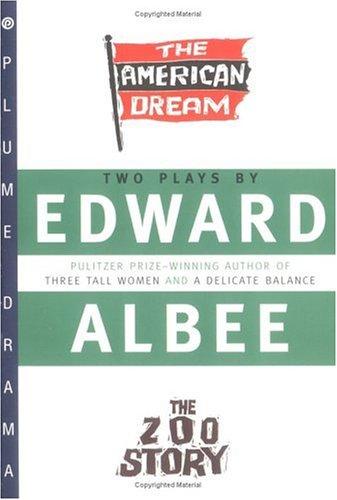
The American dream
First published 1961 · 128 pages
A biting, absurdist dismantling of the mid-century nuclear family that hides profound cruelty behind witty banter.
What it feels like
Reading this play feels like stepping into a mid-century living room where the furniture is perfect but the air is suffocating. It moves at a brisk, dialogue-driven pace, initially presenting itself as a witty domestic comedy before peeling back the wallpaper to reveal something deeply unsettling. The tone is sharply satirical and cynical, skewering the facade of the nuclear family through dominating figures and empty shells of human beings. As the clever banter gives way to dark revelations of past cruelty, the mood shifts from absurdly comical to profoundly hollow and disturbing. It is a perfect fit for readers who love mid-century drama that uses biting wit to expose the dark, mutilated underbelly of idealized American life.
- Mood
- absurdist
- unsettling
- hollow
- claustrophobic
- Tone
- satirical
- witty
- dark
- cynical
- biting
- Pace
- brisk
- Themes
- facade of the nuclear family · hollowness of ideals · cruelty and punishment · emasculation and dominance
- The writing
- Sharp, dialogue-driven, and laced with biting wit and absurd interjections.
- The arc
- Moves from sharp domestic bickering into a deeply unsettling revelation of past cruelty and hollow replacements.
- Who it's for
- Readers who appreciate dark, absurdist theatrical satires that skewer mid-century domestic ideals.
Content notes
- child abuse
- mutilation
- child death
- emotional cruelty
About the book
The play, a satire on American family life, concerns a married couple and their elderly mother. They are visited by two guests this particular day who turn their world upside down. The family in this play consist of a dominating Mommy, an emasculated Daddy and a clever and witty Grandma. A neighbor, Mrs. Barker, enters and the dialogue continues with the occasional interjection by Grandma. Mommy and Daddy exit leaving Mrs. Barker and Grandma alone. Grandma apparently knows why Mrs. Barker has been asked to come by and explains to her that Mommy and Daddy had adopted a son from her many years previously. As the parents objected to the child's actions, they mutilated it as punishment, eventually killing it. After Mrs. Barker exits, a Young Man appears at the door looking for work. After hearing his life story, Grandma realizes that this Young Man, whom she dubs "The American Dream," is the twin of Mommy and Daddy's first child. As the first child was mutilated, he too was experiencing the pain and has been left as an empty shell of a man. After seeing this Young Man as a way out, she moves her things and leaves. The Young Man is introduced to the family as a suitable replacement for the original child. --Wikipedia.com.
Description from Open Library.
Books like The American dream
See why they match Who's Afraid of Virginia Woolf?Edward AlbeeA claustrophobic, alcohol-fueled descent into the vicious psychological warfare of a marriage built on illusions.
 Buried childSam ShepardA surreal, claustrophobic descent into the rotting heart of the American family, where the past refuses to stay buried.
 AugustTracy LettsA sweltering, darkly uproarious descent into the absolute worst of American family dysfunction.
 Long Day's Journey into NightDavid RiesmanA claustrophobic, fog-bound descent into the inescapable ghosts of a family's shared past.
 Long day's journey into nightEugene O'NeillA heavy, claustrophobic descent into the bitter resentments and shattered dreams of a deeply dysfunctional family over the course of a single, agonizing day.
 Plaza suiteNeil SimonA brisk, dialogue-driven comedic experience anchored entirely within the walls of a single hotel suite.