Books › The Cat Who Played Post Office (A Jim Qwilleran Feline Whodunnit)
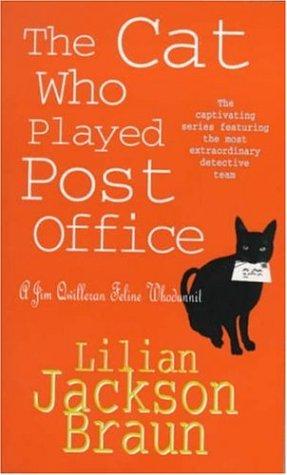
The Cat Who Played Post Office (A Jim Qwilleran Feline Whodunnit)
275 pages
A charming, small-town whodunnit where sudden wealth, buried secrets, and highly intuitive cats lead the way to the truth.
What it feels like
Reading this book feels like settling into a comfortable armchair in a quaint, slightly eccentric small town. The narrative moves at a steady, engaging pace, balancing the cozy domesticity of a sudden millionaire adjusting to his new life with the creeping suspense of a cold case. The atmosphere is charming yet inquisitive, driven by the delightful dynamic between a mustachioed journalist and his highly perceptive feline companions. As the mystery deepens—moving from hidden suitcases in closets to sudden, shocking murders—the tone remains lighthearted but grounded in classic detective work. It is a perfect read for those who delight in amateur sleuthing, quirky local characters, and the undeniable intuition of cats who always seem to know more than their human counterparts.
- Mood
- quaint
- charming
- suspenseful
- cozy
- Tone
- cozy
- inquisitive
- lighthearted
- wry
- Pace
- steady
- Themes
- feline intuition · amateur sleuthing · small-town secrets · sudden wealth · adjusting to new circumstances
- The writing
- Straightforward and charming, balancing lighthearted domestic details with the steady pacing of a classic whodunnit.
- The arc
- Moves from the comfortable adjustment of newfound wealth to the suspenseful unraveling of a long-buried small-town tragedy.
- Who it's for
- Readers who love cozy, small-town mysteries where clever feline companions are just as important to solving the case as the human detectives.
Content notes
- murder
- death of a parent
- missing persons
About the book
Jim Qwilleran is getting accustomed to his new status as the richest man in the northeast. He has hired a housekeeper, his former landlady, Iris Cobb and a part-time secretary, Lori Bamba, former postmistress. His relationship with Melinda Goodwinter which began in The Cat Who Played Brahms seems to be progressing. But she is not a big favorite with Koko and Yum Yum. His attorneys for the estate, the brother and sister team of Penelope Goodwinter and Alexander Goodwinter seem unsure about how to take their new client and his responses to his new-found wealth. But Qwill's moustache and Koko's tricks with the books lead him to inquire about the disappearance of a young girl 5 years previously. Koko leads him first to the closet where he finds her suitcase and other belongings and then to the barn on the Klingenschoen property where she had her apartment. When her mother dies just before Qwill is due to speak to her and then another young girl is murdered just after she speaks to Qwill about the missing girl, our fearless duo of human detective and cat detective are determined to get to the bottom of the mystery. An excellent read with unexpected twists and surprises.
Description from Open Library.
Books like The Cat Who Played Post Office (A Jim Qwilleran Feline Whodunnit)
See why they match The Cat Who Lived High (A Jim Qwilleran Feline Whodunnit)Lilian Jackson BraunA gentle, purr-filled puzzle that wraps a classic whodunnit in the nostalgic charm of a historic apartment building.
 The cat who turned off and onLilian Jackson BraunA gentle, antique-filled mystery where eccentric locals and brilliant feline companions take center stage.
 Nine lives to dieRita Mae BrownA wintry, small-town mystery where festive cheer is interrupted by buried secrets, leaving a woman and her animal companions to dig up the chilling truth.
 Wish you were hereRita Mae BrownA charmingly nosy postmistress and her fiercely protective pets sniff out deadly secrets in a quaint Virginia town.
 Sleight of pawSofie KellyA charming small-town mystery where a resourceful librarian and her magically gifted cats sniff out secrets to solve a local murder.
 The Cater Street HangmanAnne PerryA fog-drenched Victorian mystery where the sharpest weapon is a woman's mind breaking free from the suffocating constraints of polite society.