Books › The developmental psychology of Jean Piaget
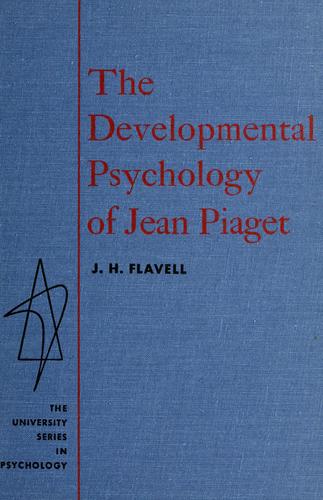
The developmental psychology of Jean Piaget
First published 1963 · 550 pages
A rigorous, foundational deep-dive into the architecture of the growing mind.
What it feels like
Reading this foundational text feels like stepping into a meticulously organized laboratory of the human mind. The pace is steady and deliberate, demanding a slow, thoughtful engagement as it unpacks the dense, stage-by-stage evolution of childhood cognition. There is a deeply intellectual, almost architectural mood to the prose, which is scholarly, objective, and rigorously structured. It lacks the narrative drive of a novel, replacing it instead with the quiet thrill of conceptual discovery—watching the chaotic world of a child's perception resolve into elegant, predictable frameworks. This is a book for the deeply curious student of human nature, rewarding patient readers with a profound, lasting understanding of how we learn to think, reason, and understand the world around us.
- Mood
- intellectual
- contemplative
- structured
- serious
- Tone
- academic
- analytical
- authoritative
- objective
- Pace
- steady
- Themes
- the architecture of thought · cognitive awakening · the evolution of understanding · childhood development
- The writing
- Dense, scholarly, and meticulously structured, prioritizing theoretical precision over stylistic flourish.
- The arc
- Moves from initial curiosity about the child's mind to a profound appreciation for the complex architecture of human cognition.
- Who it's for
- Psychology students, educators, and intellectually curious readers fascinated by the mechanics of how children learn to think.
About the book
ERIN, cop. 3-5, have imprint: New York, Van Nostrand, 1963. Bibliography: p. 447-462.
Description from Open Library.
Books like The developmental psychology of Jean Piaget
See why they match Theories of developmentWilliam C. CrainA structured, scholarly exploration of the frameworks that define human growth and psychological evolution.
 Cognitive psychologyRobert L. SolsoA rigorous, methodical journey through the architecture and mechanics of the human mind.
 Life-span developmentJohn W. SantrockA comprehensive, scholarly exploration of the psychological journey from birth to late adulthood.
 Cognitive psychology and its implicationsJohn R. AndersonA rigorous, structured journey into the mechanics of the human mind, mapping exactly how we think, learn, and remember.
 The evolving selfRobert KeganA rigorous, deeply empathetic map of how the human mind continually reconstructs its understanding of reality and self.
 Social and personality developmentDavid R. ShafferA rigorous, methodical exploration of the psychological and social forces that shape who we become.