Books › The Dragon and the Raven

The Dragon and the Raven
or, The days of King Alfred
First published 1800 · 556 pages
A rousing, old-fashioned adventure of chivalry, sea battles, and the forging of a nation against the backdrop of Viking invasions.
What it feels like
Reading this classic adventure feels like stepping into a Victorian boy's imagination, where history is painted in broad, heroic strokes. The pace is brisk, carrying the reader from desperate woodland skirmishes to sweeping naval battles against Viking longships. Henty's prose is formal and earnest, occasionally pausing for didactic historical context before plunging back into the martial action. The mood is rousing and perilous, steeped in a deep sense of duty, patriotism, and the romanticized ideals of chivalry. It is a story that traces a clear emotional arc from the ashes of a ravaged homeland to the triumphant forging of a unified kingdom. This book will delight readers who crave old-fashioned, straightforward tales of valor, loyalty, and coming-of-age on the battlefield.
- Mood
- rousing
- perilous
- martial
- triumphant
- Tone
- earnest
- heroic
- didactic
- patriotic
- Pace
- brisk
- Themes
- coming of age in wartime · loyalty and duty · forging of a nation · martial valor · clash of cultures
- The writing
- Formal, slightly archaic Victorian prose that balances detailed historical exposition with straightforward, sweeping action.
- The arc
- The journey moves from the despair of a ravaged homeland to the triumphant, hard-won establishment of peace and personal honor.
- Who it's for
- Readers who crave classic, old-fashioned adventure stories and earnest tales of chivalry and military history.
Content notes
- battle violence
- warfare
- period-typical attitudes
- death of family members
About the book
For many years England was assailed by Danish hordes whose barbarians reduced the Saxons to pitiable legions of disconnected and ravished communities. In the later 800's A.D. a man named Alfred emerged from the darkened European scene and by his wisdom and knowledge and bravery, he gathered together an army of valorous warriors who banished the Vikings back to the North. This true historic tale of the battles and the siege of Paris and the journeys across myriad oceans revolves around a fictional boy, Edmund, who is a witness to the different traditions of diverse cultures and to the slaughter and misery of his own people. He joins the service of King Alfred, in this time of bitter confusion, to be trained as a knight and marshal a zealous corps of pikemen to recapture the empire. Please Note: This book has been reformatted to be easy to read in true text, not scanned images that can sometimes be difficult to decipher. The Microsoft eBook has a contents page linked to the chapter headings for easy navigation. The Adobe eBook has bookmarks at chapter headings and is printable up to two full copies per year. Both versions are text searchable.
This title is available as a free ebook from Project Gutenberg, in plain text, html, and many other formats.
Living in the present days of peace and tranquillity it is difficult to picture the life of our ancestors in the days of King Alfred, when the whole country was for years overrun by hordes of pagan barbarians, who slaughtered, plundered, and destroyed at will. You may gain, perhaps, a fair conception of the state of things if you imagine that at the time of the great mutiny the English population of India approached that of the natives, and that the mutiny was everywhere triumphant. The wholesale massacres and outrages which would in such a case have been inflicted upon the conquered whites could be no worse than those suffered by the Saxons at the hands of the Danes. From this terrible state of subjection and suffering the Saxons were rescued by the prudence, the patience, the valour and wisdom of King Alfred. In all subsequent ages England has produced no single man who united in himself so many great qualities as did this first of great Englishmen. He was learned, wise, brave, prudent, and pious; devoted to his people, clement to his conquered enemies. He was as great in peace as in war; and yet few English boys know more than a faint outline of the events of Alfred's reign -- events which have exercised an influence upon the whole future of the English people. School histories pass briefly over them; and the incident of the burned cake is that which is, of all the actions of a great and glorious reign, the most prominent in boys' minds. In this story I have tried to supply the deficiency. Fortunately in the Saxon Chronicles and in the life of King Alfred written by his friend and counsellor Asser, we have a trustworthy account of the events and battles which first laid Wessex prostrate beneath the foot of the Danes, and finally freed England for many years from the invaders. These histories I have faithfully followed. The account of the siege of Paris is taken from a very full and detailed history of that event by the Abbe D'Abbon, who was a witness of the scenes he described. - Preface.
Description from Open Library.
Books like The Dragon and the Raven
See why they match The Last KingdomBernard CornwellA visceral, mud-and-blood-soaked plunge into the brutal clash of cultures and the heavy cost of divided loyalties.
 Beric the BritonG. A. HentyA sweeping, old-fashioned historical epic that thrusts you into the clash between ancient British tribes and the might of the Roman Empire.
 The Boy KnightG. A. HentyA classic, sweeping historical adventure that thrusts a young hero into the perils and pageantry of the Crusades.
 The Pale HorsemanBernard CornwellA mud-splattered, blood-soaked plunge into the brutal shield-walls of ninth-century England, driven by a fiercely cynical warrior torn between two worlds.
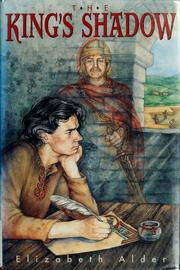 The King's ShadowElizabeth AlderA sweeping, muddy, and deeply felt journey of a silenced boy finding his true voice amidst the clash of medieval kings.
 King Solomon's MinesHenry Rider HaggardA sun-baked, perilous trek into uncharted territory where ancient mysteries and unimaginable wealth await those brave enough to survive the journey.