Books › The Elements of Orchestral Arrangement

The Elements of Orchestral Arrangement
First published 1968 · 163 pages
A rigorous, methodical masterclass in translating the intimacy of the piano into the expansive language of the orchestra.
What it feels like
Reading this book feels like sitting in a quiet, sunlit practice room with a demanding but brilliant music professor. The atmosphere is deeply studious and methodical, demanding a steady pace as you work through its highly concentrated instructional text and meticulously annotated musical examples. It is not a book to be skimmed, but rather a rigorous manual to be studied with a pencil in hand. The prose is exacting and practical, focused entirely on the mechanics of musical translation—how to expand a simple piano melody into a rich, orchestrally effective score. It will deeply satisfy music students, aspiring arrangers, and examination candidates who crave a structured, analytical approach to the complex art of orchestral arrangement.
- Mood
- studious
- focused
- academic
- methodical
- Tone
- instructional
- analytical
- exacting
- practical
- authoritative
- Pace
- steady
- Themes
- musical translation · technical mastery · creative problem-solving · structural analysis
- The writing
- Highly concentrated and meticulously detailed, prioritizing clear instruction and practical application over stylistic flourish.
- The arc
- Moves from the daunting complexity of a blank score to the satisfying clarity of a well-arranged orchestral piece.
- Who it's for
- Music students, examination candidates, and aspiring arrangers seeking a rigorous, practical guide to translating piano pieces into full orchestral scores.
About the book
From the inside front dustcover flap of the original hardcover edition:
"As the title implies, this is not primarily a book on the orchestra, but rather on the orchestration of music originally written for some other medium, normally the piano. Its aim is to help the student to think in terms of orchestral idiom and to understand how passages conceived from a purely pianistic point of view must be dealt with in order to make them orchestrally effective.
"The various departments of the orchestra are dealt with progressively and in detail, with continual insistence on the fact that 'orchestration' is not just a matter of more or less literal transcription from two staves to, say, twenty, but that it involves consideration of the musical content of the piece concerned and the implications which arise from it.
"The instructional text is highly concentrated. There are 131 musical examples, ranging from a single stave up to full score, the latter being extensively annotated. Most of the examples are taken from Schumann's 'Album for the Young'. Chapters are included on the handling of examination questions, reduction from full orchestra to small orchestra, and on scoring for school orchestras.
"Clear instruction is also given on laying out a score, a matter in which many young musicians are apt to be careless.
"Although written largely with the examination candidate in mind, this book cannot fail to be of the utmost use to all who are concerned with writing or arranging for orchestra."
Description from Open Library.
Books like The Elements of Orchestral Arrangement
See why they match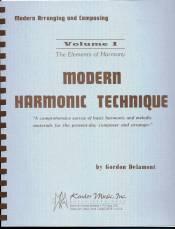 Modern harmonic techniqueGordon DelamontA rigorous, methodical exploration of the structural mechanics behind modern harmony and musical composition.
 Behind BarsElaine GouldA meticulous and deeply satisfying masterclass that transforms the chaotic art of musical composition into beautifully ordered visual architecture.
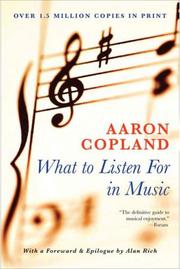 What to Listen for in MusicAaron CoplandA warm, illuminating masterclass that transforms passive hearing into active, joyful listening.
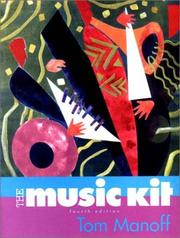 The music kitTom ManoffA hands-on, methodical journey into the foundational building blocks of musical language.
 Music theoryGeorge Thaddeus JonesA structured, methodical deep dive into the mechanics of music and harmony.
 The world of musicNicola BarberA bright, accessible journey through the global history and mechanics of sound, designed to spark a lifelong appreciation for music.