Books › The End of Eternity

The End of Eternity
458 pages
A mind-bending temporal puzzle that asks whether a perfectly safe, engineered reality is actually a cage.
What it feels like
Reading this classic feels like stepping into a grand, meticulously constructed puzzle box. The atmosphere is initially sterile and detached, mirroring the rigid bureaucracy of its time-altering protagonists, but a quiet tension steadily builds beneath the surface. As the narrative unfolds, the mood shifts from coolly analytical to urgently philosophical, driven by a growing sense of existential claustrophobia. The prose is classic Golden Age science fiction—clear, functional, and entirely focused on delivering massive, mind-bending ideas rather than lyrical flourishes. It is a steady, thought-provoking experience that delights readers who enjoy conceptual sci-fi and temporal paradoxes. Ultimately, it transforms from a cerebral exercise into a surprisingly passionate argument for the messy, dangerous, and necessary beauty of human free will.
- Mood
- sterile
- mind-bending
- quietly tense
- claustrophobic
- Tone
- analytical
- philosophical
- urgent
- earnest
- Pace
- steady
- Themes
- the cost of absolute safety · free will versus determinism · love as a disruptive force · the necessity of risk and failure
- The writing
- Clear, functional, and deeply idea-driven, prioritizing intellectual clarity over lyrical flourish.
- The arc
- The journey shifts from the cold comfort of absolute certainty to the terrifying, exhilarating embrace of the unknown.
- Who it's for
- Readers who love puzzle-box narratives and philosophical thought experiments about time, control, and human destiny.
Content notes
- existential dread
About the book
The story of temporal engineers who meta-regulate the history of humanity through the centuries, eliminating risk, adventure, and space travel in the process. One man rebels in order to save the existence of someone he loves, and in the end the time bureaucracy is destroyed for the sake of individuality and human achievement. The theme is the opposite of the Foundation stories, where the central planners and manipulators of humanity always dominate.
Description from Open Library.
Books like The End of Eternity
See why they match FoundationIsaac AsimovA sweeping, cerebral puzzle-box that spans centuries, treating the fall of a galactic empire as a mathematical certainty to be outsmarted.
 The Currents of SpaceIsaac AsimovA classic, idea-driven sci-fi mystery where political intrigue and cosmic doom intersect on a deeply unequal world.
 The Accidental Time MachineJoe HaldemanA wry, fast-paced temporal road trip where the only way out of a problem is to jump further into an increasingly bizarre future.
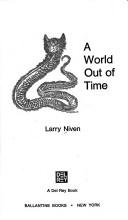 A world out of timeLarry NivenA mind-expanding plunge into deep time and relativistic physics, where the ultimate survival test awaits at the end of eternity.
 The Weapon Shops of IsherA. E. van VogtA dizzying plunge into a retro-futuristic empire where time paradoxes and political chess games collide.
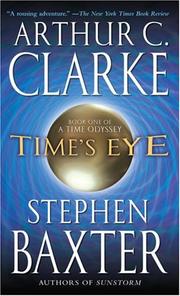 Time's Eye a Time OdysseyArthur C. Clarke and Stephen BaxterA grand, mind-bending thought experiment where the greatest empires of human history collide under the watchful eyes of unknowable cosmic forces.