Books › The Invention of Nature
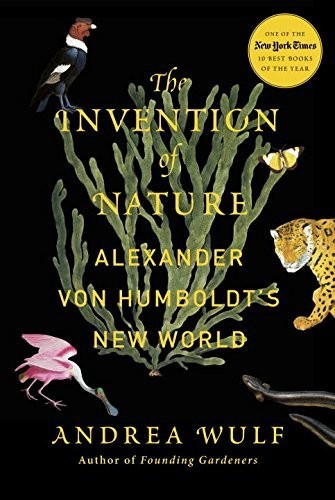
The Invention of Nature
Alexander Von Humboldt's New World
584 pages
A sweeping, globe-trotting intellectual adventure that fundamentally changes how you look at the natural world.
What it feels like
Reading this biography feels less like studying history and more like embarking on a breathless expedition across continents and centuries. The narrative moves at a brisk, adventurous clip, carrying you from the icy peaks of the Andes to the dense, humid rainforests of South America, all while tracing the invisible threads of a revolutionary idea. The prose is vibrant and deeply passionate, capturing the awe-struck reverence of early scientific discovery. It is an expansive, intellectually thrilling experience that immerses you in the sheer wonder of the natural world while sobering you with early warnings of its fragility. Perfect for lovers of narrative non-fiction who crave a story that is as physically adventurous as it is intellectually profound, leaving you with a permanently altered, deeply interconnected view of the earth.
- Mood
- expansive
- adventurous
- wondrous
- intellectually stimulating
- Tone
- passionate
- reverent
- intellectual
- earnest
- Pace
- brisk
- Themes
- interconnectedness of nature · birth of environmentalism · thrill of discovery · intellectual legacy · human impact on the earth
- The writing
- Vivid, accessible, and narrative-driven, blending rigorous historical research with the sweeping energy of a travelogue.
- The arc
- Moves from the breathless thrill of physical exploration to a profound, sobering appreciation of nature's fragility and our place within it.
- Who it's for
- Curious minds who love narrative non-fiction that blends history, science, and globe-trotting adventure.
Content notes
- environmental degradation
- colonialism
- historical animal experiments
About the book
From the Prologue...
When nature is perceived as a web, its vulnerability also becomes obvious. Everything hangs together. If one thread is pulled, the whole tapestry may unravel. After he saw the devastating environmental effects of colonial plantations at Lake Valencia in Venezuela in 1800, Humboldt became the first scientist to talk about harmful human-induced climate change. Deforestation there had made the land barren, water levels of the lake were falling and with the disappearance of brushwood torrential rains had washed away the soils on the surrounding mountain slopes. Humboldt was the first to explain the forest's ability to enrich the atmosphere with moisture and its cooling effect, as well as its importance for water retention and protection against soil erosion. He warned that humans were meddling with the climate and that this could have an unforeseeable impact on ‘future generations'.
The Invention of Nature traces the invisible threads that connect us to this extraordinary man. Humboldt influenced many of the greatest thinkers, artists and scientists of his day. Thomas Jefferson called him ‘one of the greatest ornaments of the age'. Charles Darwin wrote that ‘nothing ever stimulated my zeal so much as reading Humboldt's Personal Narrative,' saying that he would not have boarded the Beagle, nor conceived of the Origin of Species, without Humboldt. William Wordsworth and Samuel Taylor Coleridge both incorporated Humboldt's concept of nature into their poems. And America's most revered nature writer, Henry David Thoreau, found in Humboldt's books an answer to his dilemma on how to be a poet and a naturalist – Walden would have been a very different book without Humboldt. Simón Bolívar, the revolutionary who liberated South America from Spanish colonial rule, called Humboldt the ‘discoverer of the New World' and Johann Wolfgang von Goethe, Germany's greatest poet, declared that spending a few days with Humboldt was like ‘having lived several years'.
Description from Open Library.
Books like The Invention of Nature
See why they match Losing EarthNathaniel RichA gripping, infuriating historical thriller about the decade we almost saved the world, and the human flaws that stopped us.
 Adventures in the AnthropoceneGaia VinceA globe-trotting, deeply human look at our changing planet that balances the gravity of ecological crisis with the spark of human resilience.
 The age of wonderHolmes, RichardA sweeping, luminous journey into the minds of the dreamers and explorers who married poetry with the scientific method.
 The Sixth ExtinctionElizabeth KolbertA sobering, globe-trotting journey through deep time and fragile ecosystems that fundamentally alters how you view humanity's footprint.
 The Alchemy of AirThomas HagerA gripping, tragic narrative history about the brilliant minds who pulled bread from the air and inadvertently unleashed a century of unprecedented destruction.
 A Life on Our PlanetDavid Attenborough and Jonnie HughesA sobering but ultimately hopeful fireside chat with a beloved naturalist about the fate of our shared home.