Books › The Mathematical Experience

The Mathematical Experience
First published 1980 · 500 pages
A deeply humanistic journey into the philosophy, culture, and hidden beauty of mathematical thought.
What it feels like
Reading this book feels like sitting in a sunlit university office with a brilliant, endlessly patient professor who wants to show you the secret soul of the universe. It moves at a steady, contemplative pace, inviting you to linger over philosophical questions rather than rushing toward a solution. The mood is expansive and intellectually stimulating, stripping away the cold, mechanical reputation of mathematics to reveal a deeply human, creative endeavor. The prose is conversational yet erudite, translating abstract concepts into accessible, thought-provoking narratives that spark genuine awe. It is a perfect fit for curious thinkers, armchair philosophers, and anyone who has ever wondered about the nature of truth, the culture of science, and the beautiful, messy reality of how human minds construct meaning out of numbers.
- Mood
- contemplative
- intellectually stimulating
- expansive
- curious
- Tone
- inquisitive
- erudite
- conversational
- passionate
- philosophical
- Pace
- steady
- Themes
- the nature of truth · human creativity · intellectual beauty · the philosophy of numbers · the culture of science
- The writing
- Clear, engaging, and deeply humanistic, translating complex abstractions into accessible, thought-provoking narratives.
- The arc
- Begins with a gentle curiosity about abstract concepts and builds toward a profound, awe-struck appreciation for the human minds that construct them.
- Who it's for
- Curious thinkers and armchair philosophers who want to understand the soul and culture of mathematics rather than just its equations.
About the book
The Mathematical Experience by Philip J. Davis and Reuben Hersh is a book that explores the culture, history, and philosophy of mathematics. It delves into the human side of the subject, discussing how mathematicians think and work, the nature of mathematical truth, and the beauty and creativity inherent in the field. It is a classic work that won a National Book Award.
Bibliography: p. 417-434. Reprint. Originally published: Boston: Birkhäuser, 1981. Includes index.
Description from Open Library.
Books like The Mathematical Experience
See why they match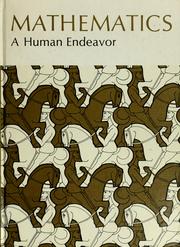 Mathematics, a human endeavourHarold R. JacobsA substantial, accessible journey into the world of mathematics, framed as a deeply human pursuit.
 Is God a mathematician?Mario LivioA contemplative journey through history and logic that asks whether the universe is fundamentally built on numbers.
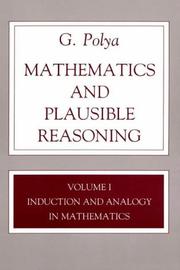 Mathematics and plausible reasoningGyorgy PolyaA masterclass in the art of intellectual discovery, revealing the intuitive leaps and educated guesses that precede rigorous proof.
 Mathematical ideasMillerAn engaging, structured approach to mathematics that bridges the gap between abstract philosophy and popular culture.
 The nature of mathematicsKarl SmithA patient, illuminating journey that transforms abstract numbers into a tangible language of logic and beauty.
 The Joy of XSteven StrogatzA friendly, eye-opening stroll through the hidden logic that shapes our everyday lives, led by the teacher you wish you had.