Books › The Memory of Earth

The Memory of Earth
378 pages
A philosophical sci-fi epic where a decaying utopia forces a fractured family to grapple with the commands of an artificial god.
What it feels like
Reading this novel feels like stepping into a grand, slow-burning myth. The narrative unfolds at a steady, deliberate pace, prioritizing deep philosophical conversations and complex family dynamics over explosive action. There is a pervasive mood of melancholic tension as an engineered utopia begins to crack, forcing its inhabitants to confront the terrifying prospect of free will. The prose is clear and accessible, yet it carries the weighty, earnest cadence of a religious text, perfectly suited to its exploration of faith, obedience, and the burden of destiny. It is a deeply contemplative experience, delighting readers who love soft science fiction that wrestles with the ethics of artificial intelligence, the corrosive nature of sibling rivalry, and the messy intersection of humanity and the divine.
- Mood
- contemplative
- tense
- melancholic
- Tone
- earnest
- philosophical
- mythic
- serious
- Pace
- steady
- Themes
- divine intervention vs. free will · corrosive sibling rivalry · the burden of destiny · societal stagnation · faith and obedience
- The writing
- Clear, accessible, and dialogue-heavy, carrying a slightly elevated, mythic cadence that grounds its philosophical debates.
- The arc
- Begins in a state of stagnant, engineered peace and slowly fractures into familial betrayal and the heavy burden of a divine mandate.
- Who it's for
- Readers who enjoy soft sci-fi that wrestles with religious allegory, deep family drama, and the ethics of artificial intelligence.
Content notes
- sibling abuse
- violence
- patriarchal societal structures
About the book
The planet called Harmony had been settled by humans nearly forty million years before. The colony had been placed under the care of an artificial intelligence, called the Oversoul, high in orbit. This master computer had one overriding command: Guard the people of Harmony against the dangers that destroyed humankind on Earth and other worlds. But now the Oversoul was itself in danger. Its systems were failing. Soon, within a thousand years, catastrophic war would break out on Harmony unless the Oversoul could be repaired.
The Oversoul determined that its core must be taken back to lost Earth, to interface with the Master Computer there, to be repaired and reprogrammed. But in order to do that, someone on Harmony must be given back the knowledge of space travel. And so the Oversoul must interfere directly with individuals on Harmony, in order to save the planet from disaster.
And so, on the planet, while on the road to the city called Basilica, a man named Wetchik had a vision of destruction, sent by the Oversoul. Soon his sons, Elemak, Issib, Mebbekew and Nafai were drawn into conflict-with the city and with each other-as the Oversoul began destabilizing forty million years of social engineering. But even a master computer worshipped as a god can't guarantee that knowledge will be used only as it is intended.
The Memory of Earth is the first of a new five book series that will carry its readers from the road to Basilica back to Lost Earth. Orson Scott Card is the award winning author of ENDER'S GAME, SPEAKER FOR THE DEAD, and the bestselling XENOCIDE.
Description from Open Library.
Books like The Memory of Earth
See why they match The ships of EarthOrson Scott CardA tense, philosophical trek through an unforgiving wasteland where the greatest dangers are the resentments festering within the family.
 EarthfallTor BooksA claustrophobic, philosophically rich journey through space where the greatest threat isn't the cosmos, but the bitter resentments of family.
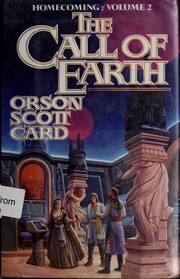 The call of earthOrson Scott CardA sweeping, philosophical sci-fi epic where family drama and political intrigue collide under the watchful eye of a failing god.
 Children of MemoryAdrian TchaikovskyA mind-bending, melancholic puzzle box that asks what it truly means to be sentient and to remember.
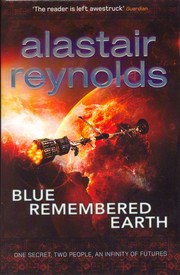 Blue remembered EarthAlastair ReynoldsA sprawling, sunlit journey across a utopian solar system where the weight of family history threatens to shatter a fragile peace.
 Remnant PopulationElizabeth MoonA quietly triumphant science fiction tale about finding your truest purpose and ultimate freedom long after society has written you off.