Books › The Path of Daggers
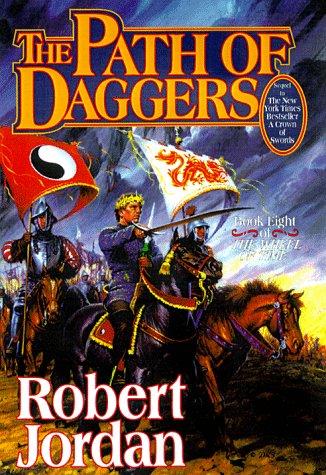
The Path of Daggers
(The Wheel of Time, Book 8)
First published 1998 · 704 pages
A sprawling, politically charged epic where the crushing weight of destiny and the horrors of untamed power take center stage.
What it feels like
Reading this installment feels like watching storm clouds gather over a vast, intricate chessboard. The narrative takes its time, settling into a steady, deliberate rhythm that prioritizes deep political maneuvering, shifting alliances, and the quiet, heavy burdens of leadership over constant action. When the storm finally breaks, the resulting magical warfare is chaotic, terrifying, and deeply tragic, highlighting the devastating cost of power. The prose is meticulous and immersive, wrapping the reader in a sprawling world where even the smallest details matter. It is a deeply atmospheric, dread-tinged experience designed for fantasy lovers who savor slow-burn character development, complex multi-POV storytelling, and the heavy, emotional toll of an impending apocalypse.
- Mood
- tense
- sprawling
- dread-tinged
- atmospheric
- Tone
- earnest
- serious
- intricate
- ominous
- Pace
- steady
- Themes
- burden of leadership · cost of war · political maneuvering · isolation and madness · corrupting nature of power
- The writing
- Meticulous and highly descriptive, weaving intricate world-building details with deep internal monologues.
- The arc
- Begins with deliberate, slow-burning political tension and culminates in a chaotic, tragic realization of the limits of control.
- Who it's for
- Readers who love sprawling, multi-POV epic fantasies where political maneuvering and character relationships take center stage before explosive magical battles.
Content notes
- war violence
- madness
- accidental death of allies
- enslavement
About the book
From Publishers Weekly The eighth book of Jordan's bestselling The Wheel of Time saga (A Crown of Swords, etc.) opens with a renewed invasion by the Seanchans, a conquering race whose arsenal includes man-carrying flying reptiles and enslaved female magic-workers as well as powerful soldiers, many of whom have joined the Seanchans out of fear of the Dragon Reborn. The Dragon himself, Rand al'Thor, appears in only a small part of the narrative, but during that time he endures the ugly experience of seeing his magic kill his friends, heightening his fear that his destiny is to slay everyone he cares about. The first third of the book is a little slower paced than is usual for Jordan, emphasizing the growth of relationships, but the action picks up soon enough. More compact than some previous volumes in the saga, this one has the virtues readers have come to expect from the author: meticulous world-building; deft use of multiple viewpoints; highly original and intelligent systems of magic; an admirable wit; and a continuous awareness of the fate of the turnip farmer or peddler caught in the path of the heroes' armies. Unlike some authors of megasagas, Jordan chooses his words with care, creating people and events that have earned him an enormous readership. For sheer imagination and storytelling skill, if not quite for mythic resonance, The Wheel of Time now rivals Tolkien's The Lord of the Rings.
Description from Open Library.
Books like The Path of Daggers
See why they match The Dragon Reborn (The Wheel of Time, Book 3)Robert JordanA sprawling, multi-threaded chase across a mythic continent where destiny feels like a physical weight.
 The Fires of HeavenRobert JordanA sprawling, high-stakes tapestry of shifting alliances, creeping madness, and the crushing weight of destiny.
 EragonChristopher PaoliniA sweeping, earnest coming-of-age epic defined by the awe-inspiring bond between a boy and his dragon.
 The Way of KingsBrandon SandersonA colossal, storm-swept epic that rewards patience with staggering world-building and intensely cathartic triumphs.
 Assassin's ApprenticeRobin HobbA deeply intimate, melancholic coming-of-age tale wrapped in the cold stone and quiet shadows of a treacherous royal court.
 Fool's fateRobin HobbA devastating, deeply intimate culmination of a lifelong bond that will break your heart and painstakingly mend it back together.