Books › The Structure of Scientific Revolutions
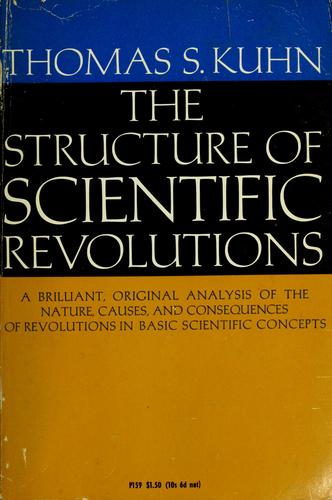
The Structure of Scientific Revolutions
First published 1983 · 361 pages
A foundational intellectual earthquake that permanently alters how you view human progress and the pursuit of truth.
What it feels like
Reading this book feels like watching a magic trick being slowly and methodically explained, only to realize the explanation is more mind-bending than the illusion itself. It unfolds at a steady, deliberate pace, wrapping you in an atmosphere of rigorous intellectual inquiry. The prose is academic but deeply engaging, guiding you through historical anomalies and scientific crises until the ground beneath your assumptions begins to shift. You are not just learning about the history of science; you are experiencing a paradigm shift in real time. It is a deeply contemplative and ultimately revelatory experience, perfect for curious minds who delight in dismantling the illusion of linear progress and exploring the messy, revolutionary reality of how human knowledge actually evolves.
- Mood
- intellectual
- contemplative
- rigorous
- revelatory
- Tone
- analytical
- persuasive
- academic
- objective
- groundbreaking
- Pace
- steady
- Themes
- the illusion of linear progress · paradigm shifts · the sociology of knowledge · scientific consensus · intellectual revolution
- The writing
- Methodical and academically rigorous, yet surprisingly accessible, using rich historical anecdotes to anchor abstract philosophical concepts.
- The arc
- Begins with a comfortable examination of history and slowly dismantles your assumptions until you experience a profound, worldview-altering epiphany.
- Who it's for
- Deep thinkers and intellectually curious readers who love questioning the fundamental frameworks of human knowledge and progress.
About the book
Traduction de: The structure of scientific revolutions.
"Cette traduction correspond à la nouvelle édition augmentée de 1970".
Description from Open Library.
Books like The Structure of Scientific Revolutions
See why they match The archaeology of knowledge & The discourse on languageMichel FoucaultA deeply cerebral deconstruction of how language and power shape the very foundations of human knowledge.
 Conjectures and refutationsPopper, Karl RaimundA rigorous, collegial exploration of the philosophical foundations of scientific progress and human knowledge.
 Mots et les chosesMichel FoucaultA dizzying, paradigm-shifting descent into the hidden structures that dictate how we think, speak, and understand the world.
 The Trouble With PhysicsLee SmolinA passionate, accessible critique of modern theoretical physics that challenges the scientific establishment and champions independent thought.
 Against MethodFeyerabend, PaulA fiery, iconoclastic manifesto that gleefully dismantles the rigid rules of scientific inquiry to celebrate the chaotic reality of human discovery.
 La Bible, le Coran et la scienceMaurice BucailleA methodical and scholarly exploration of how ancient holy texts intersect with the principles of scientific inquiry.