Books › The town and the city
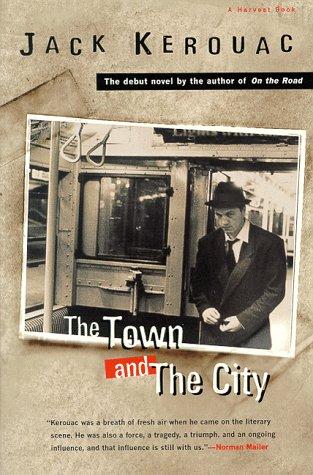
The town and the city
512 pages
A sweeping, nostalgic portrait of an American family fracturing as its sons leave the quiet certainty of their hometown for the restless energy of the city.
What it feels like
Reading this novel feels like watching the sun set on a traditional American childhood and rise over a chaotic, modern world. It unfolds at a leisurely, sprawling pace, steeped in an autumnal, wistful mood that aches with nostalgia. Unlike the frenetic, jazz-fueled spontaneous prose of the author's later masterpieces, the writing here is earnest, lyrical, and deeply indebted to Thomas Wolfe, wrapping the reader in sweeping, romanticized descriptions of small-town innocence and urban grit. The emotional journey traces a profound loss of rootedness, capturing the exact moment a generation began to wander. It will deeply satisfy readers who love mid-century family sagas, coming-of-age stories, and anyone fascinated by the quiet, searching origins of the Beat movement before it exploded into legend.
- Mood
- autumnal
- wistful
- restless
- atmospheric
- Tone
- earnest
- nostalgic
- searching
- melancholic
- Pace
- leisurely
- Themes
- loss of innocence · rural vs. urban identity · fracturing of the American family · search for meaning · youthful ambition
- The writing
- Lyrical, expansive, and heavily indebted to Thomas Wolfe, featuring sweeping, earnest descriptions rather than the frenetic jazz-rhythms of his later work.
- The arc
- Moves from the warm, rooted certainty of childhood into the fragmented, restless disillusionment of young adulthood.
- Who it's for
- Readers fascinated by the origins of the Beat Generation and lovers of sprawling, earnest mid-century American family sagas.
Content notes
- grief
- substance use
- war themes
About the book
The Town and the City is a novel by Jack Kerouac, published by Harcourt Brace in 1950. This was the first major work published by Kerouac, who later became famous for his second novel On the Road (1957). Like all of Jack Kerouac's major works, The Town and the City is essentially an autobiographical novel, though less directly so than most of his other works. The Town and the City was written in a conventional manner over a period of years, and much more novelistic license was taken with this work than after Kerouac's adoption of quickly written "spontaneous prose". The Town and the City was written before Kerouac had developed his own style, and it is heavily influenced by Thomas Wolfe (even down to the title, reminiscent of Wolfe titles such as The Web and the Rock).
The novel is focused on two locations (as suggested by the title): one, the early Beat Generation circle of New York in the late 1940s, the other, the nearly rural small town of Galloway, Massachusetts that the main character comes from, before going off to college on a football scholarship. Galloway represents the town of Lowell, Massachusetts, which the Merrimack river runs through, and where Kerouac was raised. The experiences of the young "Peter Martin" struggling for success on the high school football team are largely those of Jack Kerouac (he returns to the subject again in his last work Vanity of Duluoz, published in 1968).
The "city" represents a number of figures of the early beat circle: Allen Ginsberg (as Leon Levinsky), Lucien Carr (as Kenneth Wood), William Burroughs (as Will Dennison), Herbert Huncke (as Junky), David Kammerer (as Waldo Meister), Edie Parker (as Judie Smith) and also Joan Vollmer (as Mary Dennison) -- though she essentially has a non-speaking role (however some of her ideas are quoted by the Ginsberg-figure). Near the end of the novel, the Waldo Meister character dies by falling from the window of Kenneth Wood's apartment (a distant echo of the real event: David Kammerer knifed by Lucien Carr, possibly in self-defense). In the novel the police largely just accept this as a suicide. A version of the events closer to the truth can be found in Vanity of Duluoz, in which Carr was arrested and eventually accepted a plea of manslaughter and a prison sentence; and Kerouac was arrested and held briefly as an accessory after the fact. Still another version of the story can be found in an early novel Kerouac collaborated on with William S. Burroughs, And the Hippos Were Boiled in Their Tanks, published after Kerouac’s death.
Description from Open Library.
Books like The town and the city
See why they match Maggie CassidyJack KerouacA wistful, mid-century portrait of adolescent longing and the restless transition into adulthood in a New England mill town.
 On The RoadJack KerouacA breathless, jazz-fueled sprint across mid-century America in search of something true and untamed.
 City of NightJohn RechyAn unflinching, neon-lit journey through the gritty margins of mid-century America, pulsing with restless energy and the search for self.
 JunkyWilliam S. BurroughsA cold, clinical descent into the mid-century American underworld, stripped of romance and moralizing.
 Last Exit to BrooklynHubert Selby, Jr.A visceral, unpunctuated plunge into the desperate, violent underbelly of mid-century New York.
 Revolutionary roadRichard YatesA beautiful, remorseless portrait of a marriage suffocating under the opulent desolation of 1950s suburban life.