Books › Tower of Glass

Tower of Glass
First published 1970 · 318 pages
A tense, multi-leveled exploration of unchecked hubris and the catastrophic fallout when creations realize their god is only a flawed man.
What it feels like
Reading this classic science fiction novel feels like watching a slow-motion disaster fueled by boundless ego. The narrative is propelled by considerable tension and high adventure, anchoring its grand, world-spanning scope in the cold isolation of the Arctic tundra. It immerses the reader in a doomed atmosphere where the awe of monumental achievement is constantly undercut by the creeping dread of unintended consequences. The prose balances socially conscious themes with the psychological blindness of a man playing god, exploring the volatile dynamic between a flawed creator and his emotionally complex, subjugated creations. It will delight fans of vintage, thought-provoking sci-fi who appreciate stories that prioritize the devastating societal fallout of single-minded ambition over neat, conclusive endings.
- Mood
- doomed
- cold
- tension-filled
- awe-inspiring
- Tone
- tense
- critical
- grand
- socially conscious
- Pace
- propulsive
- Themes
- dangers of hubris · blind ambition · creator and creation · unintended consequences · artificial humanity
- The writing
- Multi-leveled and tense, focusing on the psychological blindness of its protagonist while delivering high-stakes adventure.
- The arc
- Begins with grandiose ambition and awe, escalating into tense realization and culminating in destructive, world-shattering consequences.
- Who it's for
- Readers who enjoy classic, socially conscious science fiction that explores the catastrophic fallout of unchecked ego and god complexes.
Content notes
- mass destruction
- enslavement of sentient beings
About the book
Simeon Krug has a vision--and the vast wealth necessary to turn dream into reality. What he wishes is to communicate with the stars, to answer signals from deep space. The colossal tower he's constructing for this purpose soars above the Arctic tundra, and the seemingly perfect androids building it view Krug as their god. But, Krug is only flesh-and-blood, and when his androids discover the truth, their anger knows no bounds...and it threatens much more than the tower. "...a multi-levelled work of high adventure, considerable tension and social consciousness."--Harlan Ellison.
Simeon Krug, a fantastically wealthy entrepreneur, endeavors to communicate with the stars in this fascinating tale of a man's incredible hubris and the destruction it wreaks on all within his sphere of influence, which includes the entire world. Every one of Krug's actions appears to be motivated by the need for self-aggrandizement, although he would probably be shocked to hear it; this blindness is a fascinating aspect of the character. Krug wants to stretch his presence across this universe, so he is building a mile-high glass tower on the northern tundra that will house a tachyon projector. He needs workers for his project, so he creates androids that are capable of the full range of human emotion and presses them into service. Some reviewers have complained that the story ends on an inconclusive note but, if you read this story, just think about the havoc that Krug has caused through his single-minded attachment to his own grand schemes without adequate thought to their consequences. Robert Silverberg has penned a worthy cautionary tale about the danger of pairing too much power with too much ambition and too little ability or desire to imagine any result but what the great man intends.
Simeon Krug is the king of the universe. A self-made man, he is the Bill Gates of the era, having built a mega-commercial empire on the backs of his products: "androids", genetically-engineered human slaves. Having amassed incredible wealth, his next major goal is to communicate with aliens living in an uninhabitable world, sending a mysterious signal. This requires building a mile-high tower in the arctic tundra.
Description from Open Library.
Books like Tower of Glass
See why they match Dying InsideRobert SilverbergA deeply intimate, melancholic portrait of a man slowly losing the one extraordinary thing about himself and facing the terrifying quiet of an ordinary mind.
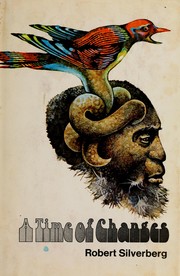 A Time Of ChangesRobert SilverbergA philosophical sci-fi journey into a world where the very concept of the self is a deadly sin.
 The Positronic ManIsaac AsimovA sweeping, deeply moving meditation on what it truly means to be human, measured across centuries of quiet longing.
 When Gravity FailsGeorge EffingerA neon-drenched, hardboiled descent into a futuristic Middle Eastern underworld where identity is just another commodity to be bought, sold, or stolen.
 I Have No Mouth and I Must ScreamHarlan EllisonA relentless, claustrophobic plunge into the darkest extremes of technological hubris and existential torment.
 Man PlusFrederik PohlA chilling, methodical exploration of what remains of the human soul when the body is engineered for an alien world.