Books › Undaunted Courage
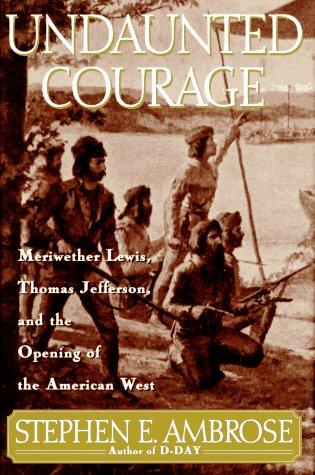
Undaunted Courage
Meriwether Lewis, Thomas Jefferson, and the opening of the American West
592 pages
A sweeping, boots-on-the-ground journey into the unknown that captures both the triumph of exploration and the heavy toll of history.
What it feels like
Reading this book feels like stepping into a rugged, awe-inspiring wilderness alongside men who are mapping the unknown. Ambrose crafts a steady, immersive narrative that balances the sheer physical grit of the expedition with the soaring intellectual ambitions of the era. The mood shifts from the sunlit optimism of early discovery to the bone-chilling reality of survival, ultimately settling into a haunting melancholy as the personal tragedies of the explorers unfold. The prose is robust and accessible, transforming meticulous historical research into a gripping adventure story. It is a deeply humanizing portrait of leadership, endurance, and the heavy burden of legacy. This book will thoroughly delight armchair explorers, history enthusiasts, and anyone captivated by the raw, untamed beauty of the frontier and the complex individuals who traversed it.
- Mood
- sweeping
- rugged
- awe-inspiring
- melancholic
- Tone
- authoritative
- admiring
- earnest
- tragic
- Pace
- steady
- Themes
- the thrill of discovery · man versus nature · the burden of leadership · manifest destiny and its costs · unfulfilled potential
- The writing
- Accessible, robust, and highly narrative, blending meticulous historical detail with the pacing of an adventure novel.
- The arc
- Begins with soaring ambition and the thrill of the unknown, peaks in triumphant survival, and descends into a tragic, haunting aftermath.
- Who it's for
- History buffs and armchair explorers who crave immersive, character-driven accounts of survival and monumental human endeavor.
Content notes
- suicide
- depression
- colonialism
- violence
- animal death
About the book
In 1803 President Thomas Jefferson selected his personal secretary, Captain Meriwether Lewis, to lead a voyage up the Missouri River to the Rockies, over the mountains, down the Columbia River to the Pacific Ocean, and back. Lewis was the perfect choice. He endured incredible hardships and saw incredible sights, including vast herds of buffalo and Indian tribes that had had no previous contact with white men.
He and his partner, Captain William Clark, made the first map of the trans-Mississippi West, provided invaluable scientific data on the flora and fauna of the Louisiana Purchase territory, and established the American claim to Oregon, Washington, and Idaho. Ambrose has pieced together previously unknown information about weather, terrain, and medical knowledge at the time to provide a colorful and realistic backdrop for the expedition.
Lewis saw the North American continent before any other white man; Ambrose describes in detail native peoples, weather, landscape, science, everything the expedition encountered along the way, through Lewis's eyes.
Lewis is supported by a rich variety of colorful characters, first of all Jefferson himself, whose interest in exploring and acquiring the American West went back thirty years. Next comes Clark, a rugged frontiersman whose love for Lewis matched Jefferson's. There are numerous Indian chiefs, and Sacagawea, the Indian girl who accompanied the expedition, along with the French-Indian hunter Drouillard, the great naturalists of Philadelphia, the French and Spanish fur traders of St.
Louis, John Quincy Adams, and many more leading political, scientific, and military figures of the turn of the century.
This is a book about a hero. This is a book about national unity. But it is also a tragedy. When Lewis returned to Washington in the fall of 1806, he was a national hero. But for Lewis, the expedition was a failure. Jefferson had hoped to find an all-water route to the Pacific with a short hop over the Rockies - Lewis discovered there was no such passage. Jefferson hoped the Louisiana Purchase would provide endless land to support farming - but Lewis discovered that the Great Plains were too dry.
Description from Open Library.
Books like Undaunted Courage
See why they match My Name Is YorkElizabeth Van SteenwykA reflective journey into the uncharted American West, experienced through the eyes of an enslaved explorer.
 Streams to the river, river to the seaScott O’DellA sweeping, bittersweet historical journey that balances the quiet intimacies of motherhood with the vastness of an untamed continent.
 The River of DoubtCandice MillardA gripping, sweat-soaked descent into an unforgiving jungle that tests the absolute limits of human endurance and sanity.
 John AdamsDavid McCulloughAn immersive, deeply human portrait of a prickly but passionate founding father and the extraordinary marriage that anchored him.
 Into the WildJon KrakauerA haunting, investigative journey into the heart of American wanderlust and the fatal price of absolute freedom.
 Washington's crossingDavid Hackett FischerAn eye-opening dive into the messy, unvarnished political realities of America's founding that shatters sanitized textbook myths.