Books › Vander's human physiology

Vander's human physiology
First published 2006 · 827 pages
A rigorous, illuminating journey through the intricate, self-balancing machinery of the human body.
What it feels like
Reading this book feels like stepping into a well-lit, highly organized laboratory where the mysteries of the human body are systematically demystified. The pace is steady and methodical, demanding focus but rewarding it with sudden bursts of clarity as complex biological mechanisms click into place. Rather than overwhelming the reader with disconnected facts, the text builds a cohesive narrative around homeostasis, making every cellular process and organ system feel like a vital piece of a grand, self-regulating puzzle. The prose is unapologetically academic yet remarkably accessible, guided by clear flowcharts that map out cause and effect. It is a deeply satisfying experience for the curious student, offering a profound appreciation for the elegant, invisible machinery that keeps us alive.
- Mood
- academic
- focused
- illuminating
- structured
- Tone
- objective
- authoritative
- educational
- clear
- Pace
- steady
- Themes
- interconnectedness of the body · balance and homeostasis · mechanisms of life · scientific inquiry
- The writing
- Clear, precise, and highly structured, prioritizing comprehension and logical flow over stylistic flourish.
- The arc
- Moves from a foundational curiosity about the body to a profound appreciation for its complex, self-regulating systems.
- Who it's for
- Undergraduate students and curious minds seeking a rigorous but accessible understanding of how the human body works.
Content notes
- medical descriptions
- anatomical diagrams
About the book
Present the fundamental principles and facts of human physiology in a format that is suitable for undergraduate students regardless of academic backgrounds or fields of study. The most significant feature of this text is its clear and accurate descriptions of mechanisms, rather than mere descriptions of facts and events. As evidence, the book employs numerous flow diagrams that illustrate clearly defined chains of casual links. The text's theme reflects the dominant theme of human physiology; homeostasis. Each body system is approached from the vantage point of homeostasis as achieved through the coordinated functions of homeostatic control systems.
Description from Open Library.
Books like Vander's human physiology
See why they match Principles of Human PhysiologyCindy L. StanfieldA rigorous, structured journey through the intricate biological machinery that keeps us alive.
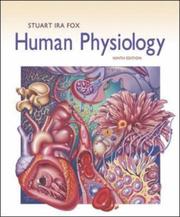 Human physiologyStuart Ira FoxA rigorous, foundational exploration of the intricate biological machinery that keeps the human body alive.
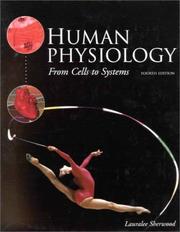 Human PhysiologyLauralee SherwoodA rigorous, methodical exploration of the human body's biological mechanics, from the microscopic to the macroscopic.
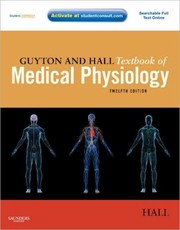 Guyton and Hall textbook of medical physiologyJohn E. HallA monumental, meticulously structured journey through the awe-inspiring mechanics of the human body.
 Animal physiologyKnut Schmidt-NielsenA masterclass in biological mechanics that transforms complex science into an elegant exploration of how life adapts to survive.
 Principles of Anatomy and PhysiologyGerard J. TortoraA rigorous, foundational journey through the intricate and awe-inspiring machinery of the human body.