Books › Verlorene Siege
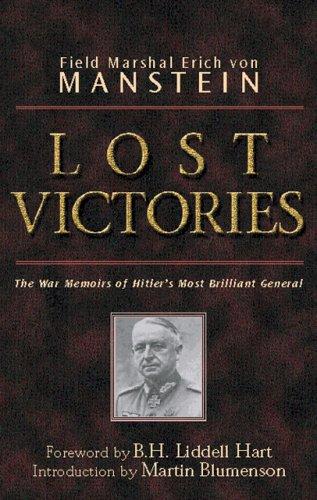
Verlorene Siege
First published 1955 · 668 pages
A clinical, highly detailed masterclass in military strategy that doubles as a controversial exercise in historical self-justification.
What it feels like
Reading this memoir feels like standing over a massive map table in a dimly lit command bunker, watching a brilliant but compromised mind move pieces across a doomed board. The narrative is remarkably steady and clinical, stripping away the visceral horror of the Eastern Front to focus purely on the intellectual puzzle of military strategy, logistics, and operational art. Its tone is fiercely authoritative yet subtly defensive, constructing a meticulous argument about professional duty and political interference. The prose is formal and precise, demanding a reader who delights in tactical minutiae and the complex mechanics of war. It is a fascinating, austere experience tailored for military history buffs who want to dissect the anatomy of a collapsing empire from the very top.
- Mood
- austere
- clinical
- tense
- retrospective
- Tone
- analytical
- authoritative
- dispassionate
- formal
- defensive
- Pace
- steady
- Themes
- military strategy · burden of command · professional duty · historical justification · mechanics of war
- The writing
- Precise, formal, and highly technical, prioritizing operational clarity and tactical detail over emotional resonance.
- The arc
- Transitions from the intellectual thrill of strategic mastery to a frustrating, inevitable sense of operational collapse.
- Who it's for
- Military history enthusiasts and armchair generals fascinated by operational strategy and the inner workings of the German high command.
Content notes
- descriptions of war and combat
- Nazi regime politics
- historical atrocities (contextual)
About the book
Originally published in Germany in 1955, and in England and the United States in 1958, this classic memoir of WWII by a man who was an acknowledged military genius and probably Germany's top WWII general, is now made available again. Field Marshal Erich von Manstein described his book as a personal narrative of a soldier, discussing only those matters that had direct bearing on events in the military field. The essential thing, as he wrote, is to "know how the main personalities thought and reacted to events." This is what he tells us in this book.His account is detailed, yet dispassionate and objective. "Nothing is certain in war, when all is said and done," But in Manstein's record, at least, we can see clearly what forces were in action. In retrospect, perhaps his book takes on an even greater significance.
Description from Open Library.
Books like Verlorene Siege
See why they match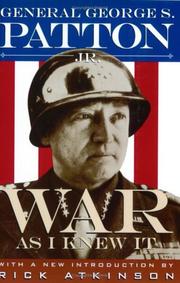 War As I Knew ItGeneral George S. Patton Jr.A candid, relentless plunge into the mind and memories of one of history's most uncompromising military strategists.
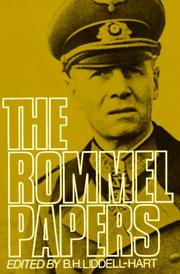 The Rommel papersErwin RommelA stark, primary-source window into the tactical realities and command decisions of World War II.
 The Second World WarWinston ChurchillA front-row seat to the twentieth century's greatest cataclysm, narrated with the booming authority of the man who helped steer the world through it.
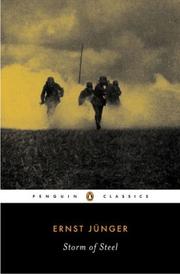 In StahlgewitternErnst JungerA chillingly beautiful, unflinching descent into the mechanized meat grinder of the First World War.
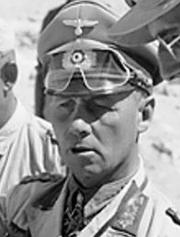 Infanterie greift anErwin Rommel Field MarshallA clinical, adrenaline-laced masterclass in frontline combat that dissects the chaos of war with chilling precision.
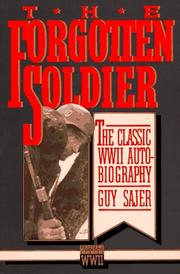 Soldat oubliéGuy SajerA harrowing, frostbitten descent into the ultimate meat grinder of twentieth-century warfare.