Books › Weep not, child
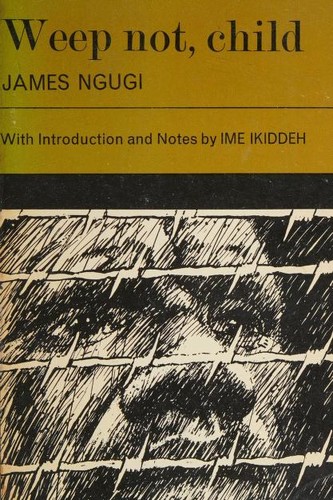
Weep not, child
First published 1964 · 184 pages
A heartbreaking coming-of-age story where the quiet dreams of childhood are slowly crushed by the inescapable machinery of war.
What it feels like
Reading this book feels like watching a slow-moving storm gather over a sunlit field. It begins with a quiet, earnest hope—the simple dream of a boy seeking salvation through education—before the brutal realities of colonial violence and rebellion bleed into everyday life. The prose is deceptively simple and unadorned, carrying a devastating emotional weight that sneaks up on you. It is a steady, atmospheric read steeped in foreboding and a profound sense of loss. You do not just read about the historical conflict; you feel the suffocating pressure it places on family bonds and individual innocence. This is a perfect match for readers who gravitate toward poignant, character-driven postcolonial classics that leave a lasting, somber ache.
- Mood
- foreboding
- heartbreaking
- tense
- melancholic
- Tone
- earnest
- somber
- compassionate
- tragic
- Pace
- steady
- Themes
- loss of innocence · colonial trauma · shattered dreams · family loyalty · the illusion of progress
- The writing
- Deceptively simple and unadorned, carrying a quiet but devastating emotional weight.
- The arc
- Moves from the bright, earnest hope of childhood ambition into a devastating confrontation with systemic violence and disillusionment.
- Who it's for
- Readers who appreciate poignant, character-driven postcolonial classics and coming-of-age stories set against historical upheaval.
Content notes
- colonial violence
- war themes
- torture
- racism
- grief and loss
About the book
"Two brothers, Njoroge and Kamau, stand on a garbage heap and look into their futures: Njoroge is to attend school, while Kamau will train to be a carpenter. But this is Kenya, and the times are against them: in the forests, the Mau Mau is waging war against the white government, and the two brothers and their family need to decide where their loyalties lie. For the practical Kamau, the choice is simple, but for Njoroge the scholar, the dream of progress through learning is a hard one to give up.First published in 1964, Weep Not, Child is a moving novel about the effects of the infamous Mau Mau uprising on the lives of ordinary men and women, and on one family in particular"--
Description from Open Library.
Books like Weep not, child
See why they match The river betweenNgugi wa Thiong'oA tragic, mythic tale of a community torn apart by the collision of ancestral tradition and colonial religion.
 A grain of wheatNgũgĩ wa ThiongʼoA masterfully woven, non-linear tapestry of a village on the brink of independence, haunted by the ghosts of rebellion, betrayal, and inner conflict.
 Petals of bloodNgũgĩ wa ThiongʼoA simmering, politically charged epic that uses a murder investigation to unearth the deep betrayals of a newly independent nation.
 Coming to birthMarjorie Oludhe MacgoyeA poignant, historically grounded journey of a young woman finding her footing in a rapidly changing, politically turbulent Kenya.
 The beautyful ones are not yet bornAyi Kwei ArmahA visceral, suffocating immersion into the moral and physical decay of a society that has lost its way.
 This earth, my brotherKofi AwoonorAn experimental prose poem that fractures reality to explore the rot and renewal of a new nation through dense, mystical allegory.