Books › What I learned losing a million dollars
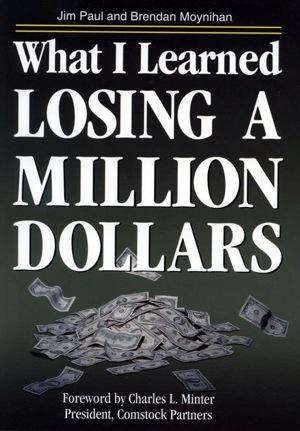
What I learned losing a million dollars
First published 1994 · 192 pages
A brutally honest autopsy of financial hubris that teaches you more about human psychology than it does about the stock market.
What it feels like
Reading this book feels like sitting at a dimly lit bar with a veteran trader who has survived the worst the market has to offer and is finally ready to tell the truth. It moves at a brisk, engaging clip, stripping away the glossy survivorship bias of typical finance literature to expose the raw, uncomfortable psychology of failure. The mood is sobering but deeply illuminating, anchored by a candid, self-deprecating tone that makes the bitter pills of wisdom easy to swallow. The prose is unpretentious and direct, blending high-stakes personal anecdotes with sharp behavioral analysis. It will thoroughly delight investors, entrepreneurs, and anyone fascinated by human irrationality, offering a masterclass in humility and the quiet power of learning how not to lose.
- Mood
- sobering
- reflective
- high-stakes
- grounded
- Tone
- candid
- cautionary
- analytical
- self-deprecating
- pragmatic
- Pace
- brisk
- Themes
- hubris and humility · the psychology of failure · emotional discipline · the illusion of control · separating self-worth from net worth
- The writing
- Direct, conversational, and unpretentious, blending personal anecdote with sharp psychological insight.
- The arc
- Moves from the dizzying highs of arrogant success to the crushing reality of catastrophic loss, ultimately landing on a grounded, hard-won wisdom.
- Who it's for
- Investors, traders, and entrepreneurs who are tired of survivorship bias and want a raw, honest look at the psychology of failure.
Content notes
- financial ruin
- gambling and speculation
About the book
WHY A BOOK ON LOSING?
Almost without exception, anyone who has participated in markets has made some money. Apparently people have at least some knowledge about making money in the markets. However, since most people have lost more money than they have made, it is equally apparent that they lack knowledge about not losing money. When they do lose, they buy books and attend seminars in search of a new method of how to make money since that last method was "obviously defective." They are like racing fans making the same losing bet on an instant replay. Investors' book shelves are filled with Horatio Alger stories of rags to riches millionaires. Sometimes these books are read solely for entertainment, but more often than not they are read in an attempt to learn the secret of how the millionaires made their fortunes, particularly when those millions were made by trading in the markets. Most of these books are of the "how-to" genre, from James Brisbin's 1881 classic The Beef Bonanza: How To Get Rich On The Plains to modern day versions of how to get rich in the market: How to win in the market..., How to use what you already know to make..., How to apply the winning strategies..., How to make a million dollars in the market before breakfast. We've all read them, but if the "how-to" books were that beneficial we'd all be rich.
A review of the investment and trading literature reveals very little written about losing money. When something has been written on this topic, it's usually a sensationalistic unauthorized tell-all biography or tabloid-like expose' which panders to people who delight in the misfortune of others. Personality journalism books are definitely read for entertainment, not as an attempt to learn from the subject's mistakes. Losing has received only superficial coverage in most books on the markets; they raise the subject, stress its importance and then leave it dangling.
What I Learned Losing A Million Dollars is a light treatise on the psychology of losing and is intended for investors, speculators, traders, brokers and money managers who have either lost money or would like to protect against losing what they've made. Most discussions of the psychological aspects of the markets focus on behavioral psychology or psychoanalysis (i.e., sublimation, regression, suppression, anger, self punishment). This isn't to say such books aren't instructive, it's just that most people find it hard to digest and apply the information presented in those books. Other books use hypothetical character sketches to make their points while others simply compile a list of old saws about losses. This book, on the other hand, entertains and educates you on the psychology of market losses in layman's terms, anecdotally, through the story of a trader who actually lost over a million dollars in the market.
Description from Open Library.
Books like What I learned losing a million dollars
See why they match Fooled by randomnessNassim Nicholas TalebA provocative, intellectual cold shower that shatters your illusions of control and makes you question every success story you have ever heard.
 Trading in the zoneMark DouglasA deep dive into the psychology of risk that transforms how you perceive uncertainty and your own mind.
 Van Tharp's definitive guide to position sizingVan K. TharpA rigorous, no-nonsense masterclass in the mathematics of trading survival and success.
 Market WizardsJack D. SchwagerA candid, fly-on-the-wall masterclass in the psychology of risk, discipline, and high-stakes decision-making.
 Come into my trading roomAlexander ElderA grounded, psychological masterclass that transforms the chaotic gamble of the markets into a rigorous discipline of the mind.
 When Genius FailedRoger LowensteinA gripping autopsy of intellectual hubris where the smartest guys in the room mathematically guarantee their own spectacular ruin.