Books › Who Goes There?

Who Goes There?
256 pages
A masterclass in claustrophobic dread where the greatest threat wears the face of your closest friend.
What it feels like
Reading this novella feels like being trapped in a freezing, windowless room where the walls are slowly closing in. The atmosphere is drenched in a suffocating, icy dread that seeps into your bones as the narrative accelerates from scientific curiosity to sheer, unadulterated paranoia. The prose is distinctly of its pulp-era origins—utilitarian, slightly clinical, and heavily focused on the mechanics of survival—which only heightens the stark terror of the situation. It is a propulsive, locked-room nightmare that strips away the comforts of human camaraderie, replacing them with a frantic, side-eyeing suspicion. This is a must-read for anyone who delights in the intersection of hard science fiction and visceral horror, offering a masterclass in tension that will leave you questioning the humanity of everyone around you.
- Mood
- claustrophobic
- dread-soaked
- chilling
- isolated
- Tone
- clinical
- paranoid
- urgent
- grim
- Pace
- propulsive
- Themes
- fragility of identity · extreme isolation · breakdown of trust · survival at all costs · terror of the unknown
- The writing
- Utilitarian and pulp-inflected, prioritizing scientific extrapolation and mounting dread over lyrical flourish.
- The arc
- Begins with detached scientific curiosity that rapidly curdles into suffocating paranoia, culminating in a desperate, high-stakes fight for survival.
- Who it's for
- Fans of classic golden-age sci-fi and claustrophobic horror who love locked-room mysteries with monstrous stakes.
Content notes
- body horror
- gore
- animal death
- intense paranoia
- violence
About the book
A remote scientific research expedition at the North Pole is invaded by a monstrous alien, reawakened after lying frozen for centuries after a crash-landing. The alien is intelligent, cunning and a shape-changer who can assume the form and personality of anything it destroys and soon it is among the men of the expedition, killing and replacing them, using its shape-changing ability to lull the scientists one by one into inattention and destruction. The transformed alien can seemingly pass every effort at detection and the expedition seems doomed until at last the secret vulnerability of the alien is discovered and it is destroyed.Who Goes There? according to the science fiction historian Sam Moskowitz (1920-1997) had an autobiographical impetus: Campbell's mother and aunt were identical twins and enjoyed the "game" of substituting for one another in his care as an infant and young child, confusing him again and again with false identity. It was this uncertainty, this susceptibility to masquerade and his terror at the game which, Moskowitz said, Campbell funneled into this last and greatest of his magazine pieces. (A short novel, The Moon Is Hell, was published only in book form in the early l950's.) Carefully and rigorously extrapolated in its portrait of the menaced expedition, the novelette is regarded as perhaps the greatest horror story to emerge form the field of science fiction. It was the basis for one of the great early science fiction films and its excellent remake decades later.The copyright of the novelette was, typically of the time, owned by Street & Smith Publications to whose magazine Campbell had sold all of the rights. Hawks paid Street & Smith $900 for all film rights, $500 of that was paid over "voluntarily" by Street & Smith to Campbell. "Don't you feel cheated?" Isaac Asimov said he asked Campbell at the time of the film's successful release. "No," Campbell said, "If it's a good film and it will get more people to read science fiction and take it seriously, then it's all a very good thing."
Description from Open Library.
Books like Who Goes There?
See why they match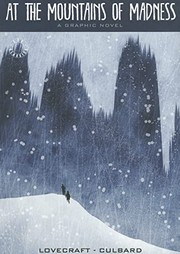 At the mountains of madnessH. P. LovecraftA chilling descent into cosmic dread where scientific discovery gives way to mind-twisting terror in the frozen wastes.
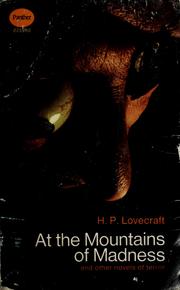 At the Mountains of MadnessHoward Phillips LovecraftA chilling descent into the frozen wastes where scientific discovery gives way to mind-bending, ancient terror.
 Beyond the riftPeter WattsA gorgeously saturnine collection of edgy science fiction that blurs the line between the known and the alien.
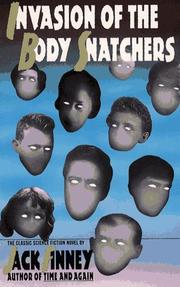 The Invasion of the Body SnatchersJack FinneyA masterclass in creeping paranoia where the most terrifying monsters wear the faces of the people you love.
 The King in YellowRobert W. ChambersA lush, hallucinatory descent into beautiful madness fueled by a forbidden text that unravels the mind.
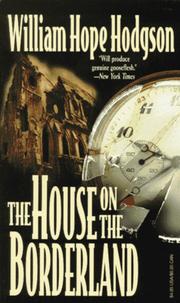 The House on the BorderlandWilliam Hope HodgsonA hallucinatory descent into cosmic dread where time, space, and sanity unravel within the walls of an isolated ruin.