Books › Zero to One
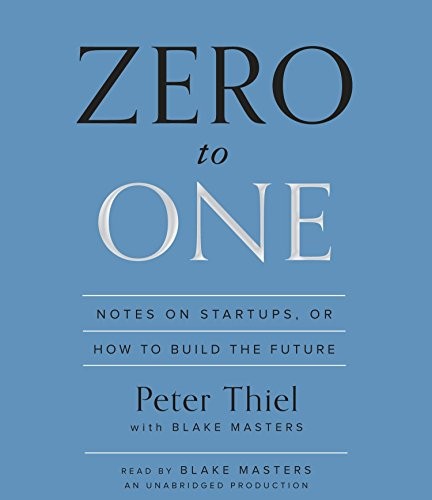
Zero to One
Notes on Startups, or How to Build the Future
320 pages
A sharp, contrarian manifesto that challenges you to stop copying the present and start inventing the future.
What it feels like
Reading this book feels like sitting across from a brilliant, slightly intimidating mentor who refuses to let you settle for conventional wisdom. It moves at a brisk, punchy pace, delivering its arguments through crisp aphorisms and sweeping philosophical claims rather than dry charts or case studies. The mood is intensely ambitious and intellectually stimulating, stripping away the comforting illusions of modern progress to reveal a landscape of untapped potential. It doesn't just want to teach you how to build a company; it wants to rewire how you perceive value, competition, and the future itself. This is a read for the restless and the visionary, those who want to break the mold rather than just iterate on what already exists.
- Mood
- intellectually stimulating
- ambitious
- forward-looking
- Tone
- contrarian
- authoritative
- philosophical
- provocative
- confident
- Pace
- brisk
- Themes
- contrarian thinking · visionary leadership · technological progress · the mechanics of innovation · challenging the status quo
- The writing
- Crisp, aphoristic, and highly quotable, delivering complex economic and philosophical ideas with punchy clarity.
- The arc
- Begins with a jarring critique of modern complacency and builds toward an empowering, expansive mandate to create something entirely new.
- Who it's for
- Ambitious entrepreneurs, tech enthusiasts, and deep thinkers who crave frameworks that challenge conventional wisdom.
About the book
If you want to build a better future, you must believe in secrets.
The great secret of our time is that there are still uncharted frontiers to explore and new inventions to create. In Zero to One, legendary entrepreneur and investor Peter Thiel shows how we can find singular ways to create those new things.
Thiel begins with the contrarian premise that we live in an age of technological stagnation, even if we’re too distracted by shiny mobile devices to notice. Information technology has improved rapidly, but there is no reason why progress should be limited to computers or Silicon Valley. Progress can be achieved in any industry or area of business. It comes from the most important skill that every leader must master: learning to think for yourself.
Doing what someone else already knows how to do takes the world from 1 to n, adding more of something familiar. But when you do something new, you go from 0 to 1. The next Bill Gates will not build an operating system. The next Larry Page or Sergey Brin won’t make a search engine. Tomorrow’s champions will not win by competing ruthlessly in today’s marketplace. They will escape competition altogether, because their businesses will be unique.
Zero to One presents at once an optimistic view of the future of progress in America and a new way of thinking about innovation: it starts by learning to ask the questions that lead you to find value in unexpected places.
Description from Open Library.
Books like Zero to One
See why they match BlitzscalingReid HoffmanA high-octane playbook for prioritizing speed over efficiency in the relentless pursuit of market dominance.
 Innovation and EntrepreneurshipPeter F. DruckerA masterclass in stripping the magic away from innovation to reveal the rigorous, repeatable discipline underneath.
 OriginalsAdam GrantAn invigorating intellectual dinner party that leaves you feeling equipped to change the world, or at least your workplace.
 The Innovator's SolutionClayton M. ChristensenA focused, analytical guide that transforms the abstract challenge of business growth into a structured, actionable framework.
 The Future Is Faster Than You ThinkPeter H. Diamandis and Steven KotlerA dizzying, urgent roadmap to the exponential technological shifts about to reinvent our daily lives.
 Think Like a Rocket ScientistOzan VarolAn intellectually expansive toolkit that makes the impossible feel entirely within reach.