Books › A Brief History of Time

A Brief History of Time
First published 1989 · 502 pages
A mind-expanding journey to the very edges of space, time, and human understanding.
What it feels like
Reading this book feels like sitting under a vast, star-filled sky with a brilliant, patient teacher who believes you are entirely capable of understanding the universe's deepest secrets. The pace is steady and deliberate, asking you to pause frequently as your brain stretches to accommodate concepts like event horizons, the arrow of time, and the curvature of space. Despite the staggering weight of the subject matter, the prose remains remarkably lucid, conversational, and laced with a gentle, wry humor. It cultivates a mood of profound, humbling awe, shrinking our daily anxieties against the backdrop of billions of years. It is a deeply rewarding experience for any curious reader willing to grapple with the beautiful, mind-bending architecture of reality.
- Mood
- expansive
- mind-bending
- contemplative
- humbling
- Tone
- accessible
- earnest
- intellectual
- wry
- Pace
- steady
- Themes
- the nature of reality · human curiosity · our place in the cosmos · the limits of knowledge
- The writing
- Clear, conversational, and remarkably lucid, using clever analogies to distill complex mathematics into plain English.
- The arc
- Moves from grounded curiosity to profound, mind-expanding awe at the scale and complexity of the universe.
- Who it's for
- Curious minds who want to grasp the fundamental workings of the universe without needing a degree in advanced calculus.
Content notes
- existential themes
About the book
Stephen Hawking's ‘A Brief History of Time* has become an international publishing phenomenon. Translated into thirty languages, it has sold over ten million copies worldwide and lives on as a science book that continues to captivate and inspire new readers each year. When it was first published in 1988 the ideas discussed in it were at the cutting edge of what was then known about the universe. In the intervening twenty years there have been extraordinary advances in the technology of observing both the micro- and macro-cosmic world. Indeed, during that time cosmology and the theoretical sciences have entered a new golden age. Professor Hawking is one of the major scientists and thinkers to have contributed to this renaissance.
Description from Open Library.
Books like A Brief History of Time
See why they match A Briefer History of TimeStephen Hawking; Leonard MlodinowA mind-expanding journey through the cosmos that makes the deepest mysteries of physics feel within your grasp.
 The theory of everythingSTEPHEN W. HAWKINGA mind-expanding journey to the very edges of human understanding, delivered with the clarity of a fireside chat.
 The Universe in a NutshellStephen HawkingA mind-expanding, accessible journey to the very edges of theoretical physics, guided by a brilliant and witty intellect.
 The Elegant UniverseBrian GreeneA mind-expanding journey into the hidden dimensions and fundamental fabric of reality that leaves you staring in awe at the everyday world.
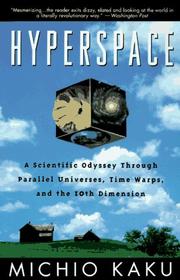 HyperspaceMichio KakuA mind-bending tour through the hidden dimensions of reality that makes the impossible feel mathematically inevitable.
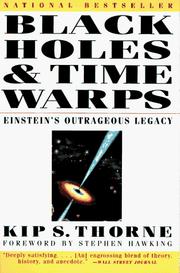 Black holes and time warpsKip S. ThorneA mind-expanding masterclass that makes the most bizarre phenomena in the universe feel thrillingly within your grasp.