Books › A general theory of love
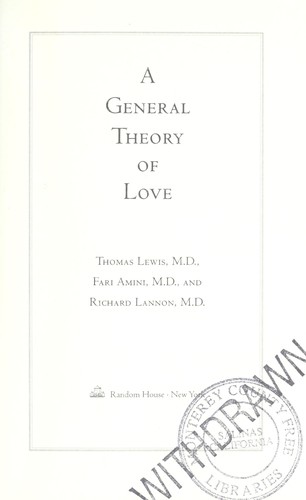
A general theory of love
288 pages
An illuminating exploration of the biological and psychological rhythms that wire us for connection.
What it feels like
Reading this book feels like stepping into a brightly lit laboratory where the most profound mysteries of the human heart are carefully placed under a microscope. The pace is steady and contemplative, guiding the reader through the intricate neuropsychological pathways that make emotional intimacy both a biological necessity and a profound vulnerability. The tone is earnest and analytical, yet deeply compassionate, treating the science of love not as a cold mechanism but as a vital, shared life force. It offers an illuminating atmosphere that shifts how you view every interaction, from parenting to psychotherapy. This is a deeply rewarding read for anyone who wants to understand the invisible, physiological threads that bind our nervous systems to the people we hold dear.
- Mood
- intellectual
- contemplative
- illuminating
- Tone
- informative
- earnest
- analytical
- compassionate
- Pace
- steady
- Themes
- neuroscience of connection · emotional intimacy · human interdependence · physiological nature of love · psychological development
- The writing
- Clear, insightful, and grounded in scientific inquiry while remaining deeply attuned to the emotional weight of its subject matter.
- The arc
- Moves from a scientific curiosity about the brain's mechanics to a profound appreciation for the deep, wordless ties that bind humanity together.
- Who it's for
- Readers fascinated by the intersection of biology and psychology who want to understand the hidden mechanics behind human connection and intimacy.
Content notes
- discussions of violent aggression
- societal dysfunction
- psychological distress
About the book
"A primordial area of the brain creates both the capacity and the need for emotional intimacy that all humans share. A General Theory of Love describes the workings of this ancient, pivotal urge and reveals that our nervous systems are not self-contained. Instead, our brains link with those of the people close to us, in a silent rhythm that makes up the very life force of the body.
These wordless and powerful ties determine our moods, stabilize and maintain our health and well-being, and change the structure of our brains.".
"A General Theory of Love applies these and other insights to some of the issues we face in our lives. Its authors explain how relationships function and where love goes wrong, how parents shape a child's developing self, how psychotherapy really works, what curbs and what fosters violent aggression in our children, and how modern society regularly courts disaster by flouting emotional laws it does not yet recognize."--BOOK JACKET.
Description from Open Library.
Books like A general theory of love
See why they match Why We LoveHelen FisherAn illuminating dive into the human brain that decodes the ancient, biological machinery behind our most romantic impulses.
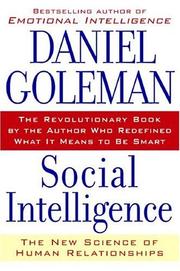 Social IntelligenceDaniel GolemanAn illuminating journey into the hidden neural pathways that make us fundamentally wired for human connection.
 AttachedAmir LevineA validating, science-backed decoder ring for the confusing dynamics of human love and intimacy.
 Hold Me TightSue JohnsonA compassionate, science-backed roadmap for turning relationship conflict into profound emotional connection.
 The psychology of romantic loveNathaniel BrandenA thoughtful, philosophical deep-dive into the mechanics of human connection and the conscious work of sustaining mature intimacy.
 Molecules of emotionCandace B. PertA passionate, paradigm-shifting journey into the microscopic architecture of human feeling.