Books › A mathematician's apology

A mathematician's apology
First published 2000 · 153 pages
A poignant, fiercely intellectual love letter to the aesthetic beauty of pure thought, written in the twilight of a genius's creative life.
What it feels like
Reading this essay feels like sitting in a quiet, sunlit Cambridge study with a brilliant, aging scholar who is opening his heart about the one great love of his life. The pace is leisurely and deeply reflective, inviting you to slow down and savor the crystalline elegance of the prose. It is less about numbers and equations than it is about the pursuit of pure, unadulterated beauty. The mood is distinctly autumnal, steeped in a poignant melancholy as the author confronts the fading of his own creative powers. It will deeply move anyone who has ever dedicated themselves to a creative or intellectual passion, offering a candid, bittersweet glimpse into the mind of a genius making peace with his legacy.
- Mood
- autumnal
- cerebral
- quiet
- melancholic
- Tone
- elegiac
- candid
- intellectual
- passionate
- wry
- Pace
- leisurely
- Themes
- the aesthetics of pure mathematics · loss of creative power · the pursuit of beauty · intellectual legacy · aging and mortality
- The writing
- Elegant, aphoristic, and crystalline, marked by a distinctly British mid-century clarity and a quiet vulnerability.
- The arc
- Begins as a fierce, lucid defense of mathematics as a creative art and gradually softens into a poignant, melancholic meditation on aging and the fading of one's own genius.
- Who it's for
- Thinkers, artists, and armchair philosophers who are fascinated by the creative process and the poignant realities of a life devoted entirely to the mind.
Content notes
- aging and cognitive decline
- melancholy
About the book
G. H. Hardy was one of this century's finest mathematical thinkers, renowned among his contemporaries as a 'real mathematician... the purest of the pure'. He was also (as C. P. Snow recounts in his Foreword to the 1967 edition) 'unorthodox, eccentric, radical, ready to talk about anything'. This 'apology', written in 1940 as his mathematical powers were declining, offers a brilliant and engaging account of mathematics as very much more than a science; when it was first published, Graham Greene hailed it alongside Henry James's notebooks as 'the best account of what it was like to be a creative artist'.
C. P. Snow's Foreword gives sympathetic and witty insights into Hardy's life, with its rich store of anecdotes concerning his collaboration with the brilliant Indian mathematician Ramanujan, his aphorisms and idiosyncrasies, and his passion for cricket. This is a unique account of the fascination of mathematics and of one of its most compelling exponents in modern times.
Description from Open Library.
Books like A mathematician's apology
See why they match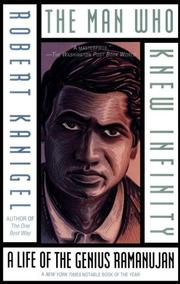 The Man Who Knew InfinityRobert KanigelA deeply moving portrait of raw genius and the profound, tragic collision of two vastly different worlds united by the language of mathematics.
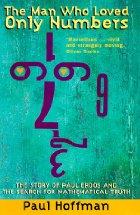 The Man Who Loved Only NumbersPaul HoffmanA warm, energetic portrait of a brilliant, chaotic mind that makes the abstract world of mathematics feel deeply human.
 Is God a mathematician?Mario LivioA contemplative journey through history and logic that asks whether the universe is fundamentally built on numbers.
 MathematicsTimothy GowersA patient, mind-expanding glimpse into the elegant, abstract world of advanced mathematics.
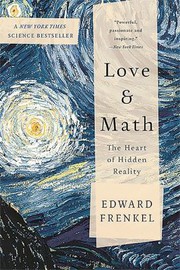 Love and MathEdward FrenkelA passionate love letter to the hidden, artistic beauty of the universe, wrapped in a story of personal resilience.
 Fermat's Last TheoremSimon SinghA centuries-spanning intellectual thriller that makes the pursuit of a mathematical proof feel like a high-stakes treasure hunt.