Books › The Man Who Loved Only Numbers

The Man Who Loved Only Numbers
First published 1998 · 357 pages
A warm, energetic portrait of a brilliant, chaotic mind that makes the abstract world of mathematics feel deeply human.
What it feels like
Reading this biography feels like being invited into the chaotic, brilliant, and surprisingly warm orbit of a true eccentric. The narrative moves at a brisk, energetic pace, mirroring the restless, globe-trotting lifestyle of its subject. Hoffman’s prose is highly accessible and journalistic, effortlessly translating the abstract beauty of pure mathematics into engaging, human-centered anecdotes that require no prior mathematical background to enjoy. The tone is deeply affectionate and wry, treating its subject's quirks with humor rather than judgment. As the story unfolds, the mood shifts from lighthearted fascination to a poignant appreciation for the sacrifices inherent in absolute obsession. It is a delightful, intellectually stimulating experience perfect for readers who love character-driven pop-science and stories of unconventional found families.
- Mood
- intellectually stimulating
- warm
- energetic
- quirky
- Tone
- affectionate
- wry
- accessible
- admiring
- humorous
- Pace
- brisk
- Themes
- the beauty of pure thought · eccentric genius · unconventional found families · the sacrifices of obsession · the pursuit of truth
- The writing
- Clear, journalistic, and highly engaging, effortlessly weaving complex mathematical concepts into warm, human-centered anecdotes.
- The arc
- Begins with amused fascination at a brilliant eccentric and deepens into a poignant appreciation for a life entirely consumed by a singular, beautiful obsession.
- Who it's for
- Readers who delight in character-driven biographies of brilliant eccentrics and accessible pop-science that prioritizes the human element.
Content notes
- aging
- grief
- historical trauma (WWII background)
About the book
"Paul Erdos, the most prolific and eccentric mathematician of our time, forsook all creature comforts - including a hometo pursue his lifelong study of numbers. He was a man who possessed unimaginable powers of thought yet was unable to manage some of the simplest daily tasks." "For more than six decades, Erdos lived out of two tattered suitcases, crisscrossing four continents at a frenzied pace, chasing mathematical problems and fresh talent. Erdos saw mathematics as a search for lasting beauty and ultimate truth. It was a search Erdos never abandoned, even as his life was torn asunder by some of the major political dramas of our time." "In this biography, Hoffman uses Erdos's life and work to introduce readers to a cast of remarkable geniuses, from Archimedes to Stanislaw Ulam, one of the chief minds behind the Los Alamos nuclear project. He draws on years of interviews with Ronald Graham and Fan Chung, Erdos's chief American caretakers and devoted collaborators. With an eye for the hilarious anecdote, Hoffman explains mathematical problems from Fermat's Last Theorem to the more frivolous "Monty Hall dilemma." What emerges is an intimate look at the world of mathematics and an indelible portrait of Erdos, a charming and impish philosopher-scientist whose accomplishments continue to enrich and inform our world."--Jacket.
Description from Open Library.
Books like The Man Who Loved Only Numbers
See why they match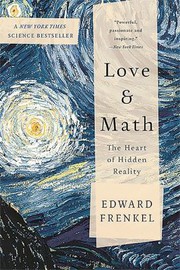 Love and MathEdward FrenkelA passionate love letter to the hidden, artistic beauty of the universe, wrapped in a story of personal resilience.
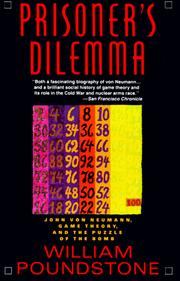 Prisoner's dilemmaWilliam PoundstoneA fascinating, slightly unsettling journey into the mathematical logic of human conflict and the brilliant minds that shaped the Cold War.
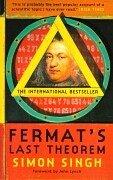 Fermat's Last TheoremSimon SinghA centuries-spanning intellectual thriller that makes the pursuit of a mathematical proof feel like a high-stakes treasure hunt.
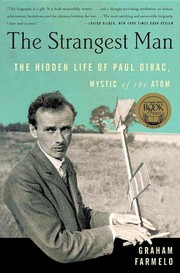 The strangest manGraham FarmeloAn illuminating journey into the brilliant, contradictory mind of one of modern science's most enigmatic figures.
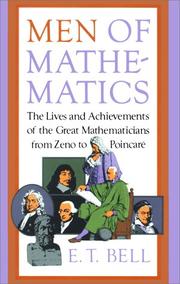 Men of mathematicsEric Temple BellA dramatic, romanticized gallery of history's greatest minds that frames the pursuit of numbers as the ultimate human adventure.
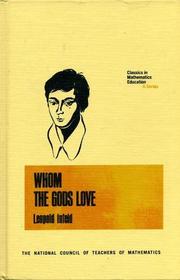 Whom the gods loveLeopold InfeldA feverish and tragic immersion into the mind of a doomed genius whose brilliant spark was extinguished too soon.