Books › A tale of a tub

A tale of a tub
First published 1957 · 2862 pages
A biting, footnote-heavy satirical romp through the absurdities of literary and intellectual debates.
What it feels like
This classic English satire offers a meandering, highly discursive reading experience that revels in the absurdities of intellectual feuds. Structured with elaborate epistles, apologies, and extensive footnotes, the text mimics the very scholarly seriousness it seeks to mock. The mood is combative and witty, plunging the reader into a fantastical battleground where ancient and modern books literally fight, and the mechanical operation of the spirit is dissected with contemptuous humor. The prose is dense with layered irony, demanding a reader who appreciates the intricate, biting mockery of historical literary debates. It will delight those who enjoy classic, sharp-tongued humor and the chaotic, fragmented texture of a text that playfully weaponizes academic conventions against its own targets.
- Mood
- witty
- combative
- absurd
- scholarly
- Tone
- satirical
- humorous
- contemptuous
- mocking
- intellectual
- Pace
- meandering
- Themes
- intellectual debate · literary rivalry · authorship and legacy · ancient versus modern learning
- The writing
- A dense, footnote-laden, and highly discursive style that uses formal academic structures to deliver biting satire.
- The arc
- A journey through biting intellectual mockery and absurd literary battles, culminating in a sharp critique of contemporary scholarship.
- Who it's for
- Readers who delight in classic English satire, literary history, and the absurd spectacle of intellectual feuds.
About the book
Pages 197 and 233 misnumbered "297" and "133" respectively.
Double line borders on title and special title pages.
"A full and true account of the battel fought last Friday, between the antient and the modern books in St. James's library" and "A discourse concerning the mechanical operation of the spirit. In a letter to a friend. A fragment" each has special title page.
"The epistle dedicatory, to His Royal Highness Prince Posterity": p. [1]-12.
"Contains the Apology, the footnotes, and 8 plates for the first time. The unsigned footnotes are by Swift."--Cambridge bibliography of English literature.
Written following the censure by W. Wotton and R. Bentley of W. Temple's "Ancient and modern learning," a theme then being debated in Paris by Fontenelle and others, in England by Bentley and C. Boyle. cf. Oxford companion to English literature; Dictionary of national biography.
"The authorship, never seriously doubted, was assumed by Swift in a letter to his publisher Tooke (29 June 1710)... Curll, in a 'Key', had insinuated that Thomas Swift, Jonathan's cousin, who had been chaplain at Moor Park, was the chief author. Wotton, in his 'Defence' of his 'Reflections,' also calls Thomas the editor. Swift, in writing to... Tooke, makes some contemptuous references to his 'little parson cousin,' whom he guesses to have been an accomplice in this."--Dictionary of national biography.
Microfiche. Chicago, Ill.: Library Resources, inc., 1976. 1 sheet of microfiche: positive; 8 x 13 cm. (Library of English literature; LEL 12133)
Description from Open Library.
Books like A tale of a tub
See why they match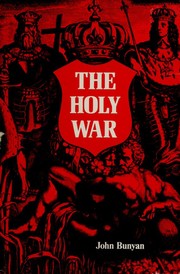 The holy warJohn BunyanA grand, allegorical siege of the human soul, where cosmic forces clash over the citadel of the heart.
 Gulliver's TravelsJonathan SwiftA deadpan, fantastical travelogue that uses bizarre worlds to ruthlessly mock the absurdities of human nature.
 The English constitutionWalter BagehotA sharp, witty peeling back of the velvet curtain to reveal the pragmatic machinery of power.
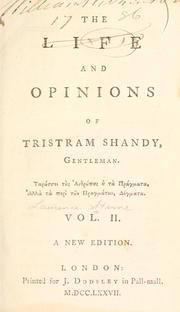 The Life and Opinions of Tristram Shandy, GentlemanLaurence SterneA gloriously chaotic, endlessly digressive romp that breaks every rule of storytelling to capture the absurd comedy of human existence.
 Love and FreindshipJane AustenA gleefully unhinged parody of romantic melodrama that proves even literary giants were once chaotic teenagers.
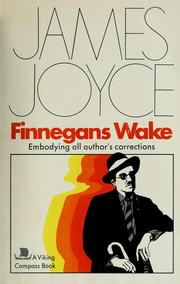 Finnegans WakeJames JoyceA kaleidoscopic plunge into the subconscious, built from a dizzying, multilingual dream-language that defies all literary conventions.